Today's
EarthStation1.com 15% Off Commemorative Memorial Title: Butt Out:
The Life & Death Of TV Cigarette Advertising DVD, MP4, USB
Today, December 13, 2025
( HAPPY 100th BIRTHDAY DICK VAN DYKE!!!!!
) ========= December 13, 1925: #BOTD: #HBD! Dick Van Dyke,
American entertainer, actor, singer, comedian and dancer of stage,
radio, television and film, is #born Richard Wayne Van Dyke in
West Plains, Missouri. His award-winning career has spanned seven
decades in film, television, and stage. Van Dyke began his career
as an entertainer on radio and television, in nightclubs, and on
the Broadway stage. In 1961, he starred in the original production
of Bye Bye Birdie alongside Chita Rivera, a role which earned him
the Tony Award for Best Actor in a Musical. Carl Reiner then cast
him as Rob Petrie on the CBS television sitcom The Dick Van Dyke
Show (1961-1966), which made him a household name. He went on to
star in the motion picture musicals Bye Bye Birdie (1963), Mary
Poppins (1964), and Chitty Chitty Bang Bang (1968), and in the
comedy-drama The Comic (1969). He made guest appearances on
television programs Columbo (1974) and The Carol Burnett Show
(1977), and starred in The New Dick Van Dyke Show (1971-74),
Diagnosis: Murder (1993-2001), and Murder 101 (2006-08). Van Dyke
has also made appearances in the motion pictures Dick Tracy
(1990), Curious George (2006), Night at the Museum (2006), Night
at the Museum: Secret of the Tomb (2014), and Mary Poppins Returns
(2018). Van Dyke is the recipient of five Primetime Emmys, a
Golden Globe, a Tony, and a Grammy Award, and was inducted into
the Television Hall of Fame in 1995. He received the Screen Actors
Guild's highest honor, the SAG Life Achievement Award, in 2013. He
has a star on the Hollywood Walk of Fame at 7021 Hollywood
Boulevard and has also been recognized as a Disney Legend. In
2021, Van Dyke was honored with the Kennedy Center Honors. On Sale
@ 15% Off Discount Till Midnight PT!
https://store.earthstation1.com/butt-out-life-amp-death-of-tv-cigarette-commercials-dvd-mp4-us4.html
Today's
EarthStation1.com 15% Off Commemorative Memorial Title: Gimme That
Old Time Christmas! Holiday Films DVD, MP4 Download, USB
Today, December 13, 2025
December 13, 2025: Santacon 2025 (most US
cities; see the SantaCon.info website for dates) observed.
SantaCon is an annual pub crawl in which people dressed in Santa
Claus costumes or as other Christmas characters parade in various
cities around the world. A December 2014 cover story in the
Village Voice recounted how SantaCon had evolved from "joyful
performance art" that originated in San Francisco to a
"reviled bar crawl" of drunken brawling, vandalism,
public urination and disorder in New York City and elsewhere,
resulting in fierce community resistance and disavowals from the
originators of the event. It is observed on various dates in
various cities worldwide; SantaCon.info states "SantaCons are
normally in December (although there are a few exceptions) and,
while most dates are not usually published until September at the
earliest, some are published as early as January". On Sale @
15% Off Discount Till Midnight PT!
https://store.earthstation1.com/gimme-that-old-time-christmas-classic-yuletide-holiday-films-dvd.html
Today's
EarthStation1.com 15% Off Commemorative Memorial Title: War Jets:
The General Dynamics F-16 Fighting Falcon MP4 2 DVD Set
Today, December 13, 2025
December 13: National Guard Birthday
(United States): -- On December 13, 1636, the Massachusetts Bay
Colony organizes three militia regiments to defend the colony
against the Pequot Indians. That date is now considered the
founding of the National Guard of the United States. The National
Guard is a U.S. state-based military force that becomes part of
the reserve components of the United States Army and the United
States Air Force when activated for federal missions. It is a
military reserve force composed of National Guard military members
or units of each state and the territories of Guam, the Virgin
Islands, Puerto Rico, and the District Of Columbia, for a total of
54 separate organizations. It is officially created under
Congress's Article 1 Section 8 ability to 'raise and support
armies'. All members of the National Guard are also members of the
organized militia of the United States as defined by Title 10 of
the United States Code Section 246. National Guard units are under
the dual control of the state governments and the federal
government. The majority of National Guard soldiers and airmen
hold a civilian job full-time while serving part-time as a
National Guard member. These part-time guardsmen are augmented by
a full-time cadre of Active Guard & Reserve (AGR) personnel in
both the Army National Guard and Air National Guard, plus Army
Reserve Technicians in the Army National Guard and Air Reserve
Technicians (ART) in the Air National Guard. The National Guard is
a joint activity of the United States Department of Defense (DoD)
composed of reserve components of the United States Army and the
United States Air Force: the Army National Guard and the Air
National Guard, respectively. Local militias were formed from the
earliest English colonization of the Americas in 1607. The first
colony-wide militia was formed by Massachusetts in 1636 by merging
small older local units, and several National Guard units can be
traced back to this militia. The various colonial militias became
state militias when the United States became independent. The
title "National Guard" was used in 1824 by some New York
State militia units, named after the French National Guard in
honor of the Marquis de Lafayette. "National Guard"
became a standard nationwide militia title in 1903, and has
specifically indicated reserve forces under mixed state and
federal control since 1933. On Sale @ 15% Off Discount Till
Midnight PT!
https://store.earthstation1.com/war-jets-the-f16-fighting-falcon-d16.html
Today's
EarthStation1.com 15% Off Commemorative Memorial Title: Robert E.
Lee Documentaries DVD, MP4 Video Dowload, USB Flash Drive
Today, December 13, 2025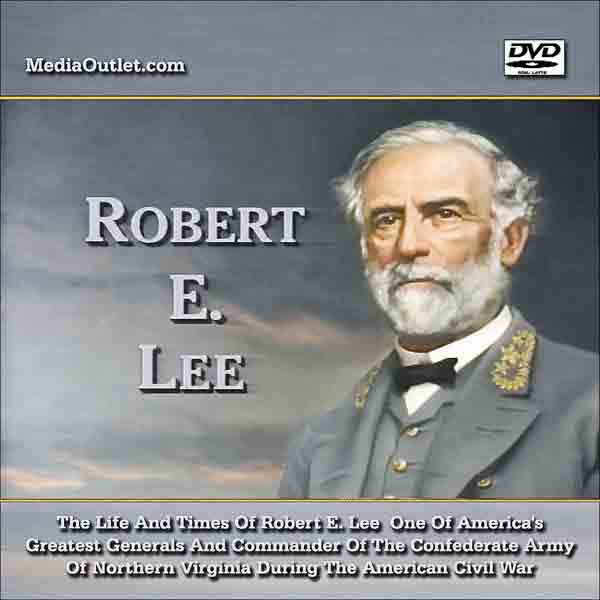
December 13, 1862: The American Civil War
(The Civil War, The War Between The States): The Eastern Theater
Of The American Civil War: The Battle Of Fredericksburg: --
Confederate General Robert E. Lee's Army Of Northern Virginia
defeats the Union Army Of The Potomac under Major General Ambrose
Burnside, with a Union loss of 12,653 men after 14 frontal
assaults on well entrenched Rebels on Marye's Heights. Confederate
losses were 5,309. "It is well that war is so terrible: we
should grow too fond of it," stated Confederate Gen. Robert
E. Lee during the fighting. A visitor to the battlefield described
the battle to U.S. President Abraham Lincoln as a "butchery".
"We might as well have tried to take hell," a Union
soldier remarked. The Battle Of Fredericksburg was fought December
11-15, 1862, in and around Fredericksburg, Virginia. Burnside's
plan was to cross the Rappahannock River at Fredericksburg in
mid-November and race to the Confederate capital of Richmond
before Lee's army could stop him. Bureaucratic delays prevented
Burnside from receiving the necessary pontoon bridges in time and
Lee moved his army to block the crossings. When the Union army was
finally able to build its bridges and cross under fire, direct
combat within the city resulted on December 11-12. Union troops
prepared to assault Confederate defensive positions south of the
city and on a strongly fortified ridge just west of the city known
as Marye's Heights. On December 13, the Left Grand Division of
Maj. Gen. William B. Franklin was able to pierce the first
defensive line of Confederate Lt. Gen. Stonewall Jackson to the
south, but was finally repulsed. Burnside ordered the Right and
Center Grand Divisions of Maj. Gens. Edwin V. Sumner and Joseph
Hooker to launch multiple frontal assaults against Lt. Gen. James
Longstreet's position on Marye's Heights - all were repulsed with
heavy losses. On December 15, Burnside withdrew his army, ending
another failed Union campaign in the Eastern Theater. On Sale @
15% Off Discount Till Midnight PT!
https://store.earthstation1.com/robert-e-lee-documentaries-dvd.html
Today's
EarthStation1.com 15% Off Commemorative Memorial Title: America
Goes Over - The Yanks Are Coming! WWI DVD, Download, USB Drive
Today, December 13, 2025
December 13, 1887: #BOTD: #HBD! Alvin
York, also known as Alvin C. York and as Sergeant York, American
colonel, Medal Of Honor recipient, one of the most decorated
United States Army soldiers of World War I (d. September 2, 1964)
is #born Alvin Cullum York in a two-room log cabin in rural
Fentress County in Tennessee. During World War I, on October 8,
1918 in the Argonne Forest in France, U.S. Sergeant Alvin C. York
single-handedly took out a German machine-gun battalion, taking 35
machine guns from their machine gun nest, killing 25 to 28 men and
capturing 132. He was later awarded the U.S. Medal Of Honor and
the French Croix de Guerre for leading this lone attack. It
occurred during the United States-led portion of the Meuse-Argonne
Offensive in France, which was intended to breach the Hindenburg
line and force the Germans to surrender. He earned decorations
from several allied countries during WWI, including France, Italy,
and Montenegro. Alvin York's parents were farmers, and his father
also worked as a blacksmith. The eleven York children had minimal
schooling because they helped provide for the family, which
included hunting, fishing, and hiring out as laborers. After the
death of his father, York assisted in caring for his younger
siblings and found work as a logger and on construction crews.
Despite being a regular churchgoer, York also drank heavily and
was prone to fistfights. After a 1914 conversion experience, he
vowed to improve and became even more devoted to the Church of
Christ in Christian Union. York was drafted during World War I; he
initially claimed conscientious objector status on the grounds
that his religious denomination forbade violence. Persuaded that
his religion was not incompatible with military service, York
joined the 82nd Division as an infantry private and went to France
in 1918. In October 1918, as a newly-promoted corporal, York was
one of a group of seventeen soldiers assigned to infiltrate German
lines and silence a machine gun position. After the American
patrol had captured a large group of enemy soldiers, German small
arms fire killed six Americans and wounded three. York was the
highest ranking of those still able to fight, so he took charge.
While his men guarded the prisoners, York attacked the machine gun
position, dispatching several German soldiers with his rifle
before running out of ammunition. Six German soldiers charged him
with bayonets, and York drew his pistol and killed them all. The
German officer responsible for the machine gun position had
emptied his pistol while firing at York but failed to hit him.
This officer then offered to surrender and York accepted. York and
his men marched back to their unit's command post with more than
130 prisoners. York was immediately promoted to sergeant and was
awarded the Distinguished Service Cross; an investigation resulted
in the upgrading of the award to the Medal Of Honor. York's feat
made him a national hero and international celebrity among allied
nations. After Armistice Day, a group of Tennessee businessmen
purchased a farm for York, his new wife, and their growing family.
He later formed a charitable foundation to improve educational
opportunities for children in rural Tennessee. In the 1930s and
1940s, York worked as a project superintendent for the Civilian
Conservation Corps and managed construction of the Byrd Lake
reservoir at Cumberland Mountain State Park, after which he served
for several years as park superintendent. A 1941 film about his
World War I exploits, Sergeant York, was that year's
highest-grossing film; Gary Cooper won the Academy Award for Best
Actor for his portrayal of York, and the film was credited with
enhancing American morale as the US mobilized for action in World
War II. In his later years, York was confined to bed by health
problems. He died in Nashville, Tennessee, in 1964 and was buried
at Wolf River Cemetery in his hometown of Pall Mall. On Sale @ 15%
Off Discount Till Midnight PT!
https://store.earthstation1.com/america-goes-over--the-yanks-are-coming-wwi-propaganda-dvd.html
Today's
EarthStation1.com 15% Off Commemorative Memorial Title: Carmen
(1983) Flamenco Dance As Bizet's Opera DVD, Download, USB Drive
Today, December 13, 2025
December 13, 1903: #BOTD: #HBD! Carlos
Montoya, Spanish guitarist and composer (d. March 3, 1993) is
#born Carlos Garcia Montoya in Madrid, Spain. Montoya was a
prominent flamenco guitarist and a founder of the modern-day
popular flamenco style of music, credited with having transformed
flamenco guitar music into a separate music style, beyond being a
traditional dance accompaniment. He adapted flamenco to other
genres of music to create his own recognizable style, becoming an
international star. However, his style was not particularly
appreciated by some serious flamenco students, who considered it
less traditional than many others. That he was unpopular among
aficionados was possibly because he abandoned the compas that had
evolved within flamenco over hundreds of years. Many of his works
do not even keep perfect tempo, increasing and decreasing in speed
almost whimsically. He was admired for the speed of his picados
and found popularity on the international stage as a result of
this technically impressive pace. His name is the inspiration for
the character Montoya in Carlos Saura's flamenco dance film Carmen
(1983) based on Bizet's opera of the same name. Carlos Montoya
died at the age of 89 of heart failure in Wainscott, New York, on
Long Island. He is buried at Wainscott Cemetery in Wainscott. On
Sale @ 15% Off Discount Till Midnight PT!
https://store.earthstation1.com/carmen-1983-dvd-carlos-saura-flamenco-dance-interpreta1983.html
Today's
EarthStation1.com 15% Off Commemorative Memorial Title: School
Segregation: Little Rock & Boston MP4 Video Download DVD
Today, December 13, 2025
December 13, 1903: #BOTD: #HBD Ella
Baker, African American activist civil rights and human rights
activist (December 13, 1986) is #born Ella Josephine Baker in
Norfolk, Virginia. An extraordinarily important African American
civil rights and human rights activist, Ella Baker was a largely
behind-the-scenes organizer whose career spanned more than five
decades. In New York City and the South, she worked alongside some
of the most noted civil rights leaders of the 20th century,
including W. E. B. Du Bois, Thurgood Marshall, A. Philip Randolph,
and Martin Luther King Jr. She also mentored many emerging
activists, such as Diane Nash, Stokely Carmichael, and Bob Moses,
as leaders in the Student Nonviolent Coordinating Committee
(SNCC). Baker criticized professionalized, charismatic leadership;
she promoted grassroots organizing, radical democracy, and the
ability of the oppressed to understand their worlds and advocate
for themselves. She realized this vision most fully in the 1960s
as the primary advisor and strategist of the SNCC. Biographer
Barbara Ransby calls Baker "one of the most important
American leaders of the twentieth century and perhaps the most
influential woman in the civil rights movement". She is known
for her critiques of both racism in American culture and sexism in
the civil rights movement. On Sale @ 15% Off Discount Till
Midnight PT!
https://store.earthstation1.com/school-segregation-little-rock-amp-boston-mp4-video-download-dv4.html
Today's
EarthStation1.com 15% Off Commemorative Memorial Title: War Props:
The Messerschmitt Bf 109 DVD, MP4 Download, USB Flash Drive
Today, December 13, 2025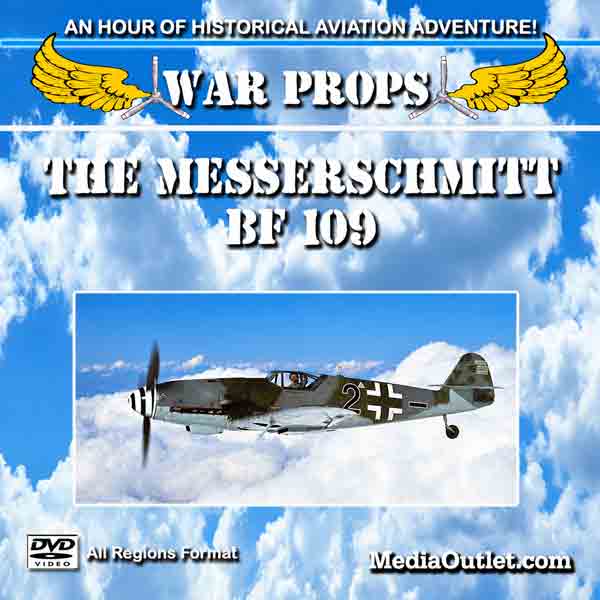
December 13, 1919: #BOTD: #HBD!
Hans-Joachim Marseille, nicknamed "Jochen" and "The
Star Of Africa", German Luftwaffe captain and flying ace
renowned for his bohemian lifestyle, responsible for claiming more
aerial victories over Western Allied aircraft than any other pilot
- 158 (all but 7 against the British Commonwealth's Desert Air
Force over North Africa), all while flying the Messerschmitt Bf
109 fighter aircraft and all within the short time span of August
24, 1940 - September 26, 1942, a man openly disdainful of the Nazi
Party and specifically of Adolf Hitler, deliberately doing things
in front of Hitler that he knew would disturb and insult him ,
even going so far as to play Jazz and Swing music on the piano in
his presence and choosing as his inseparable assistant and buddy a
black South African POW (d. September 30, 1942) is #born in
Berlin, Weimar Republic, Germany. Marseille, of French Huguenot
ancestry, joined the Luftwaffe in 1938. At the age of 20, he
graduated from one of the Luftwaffe's fighter pilot schools just
in time to participate in the Battle of Britain, without notable
success. A charming person, he had such a busy nightlife that
sometimes he was too tired to be allowed to fly the next morning.
As a result of poor discipline, he was transferred to
Jagdgeschwader 27 (Fighter Wing 27, JG 27), which relocated to
North Africa in April 1941. Under the guidance of his new
commander, who recognised the latent potential in the young
officer, Marseille quickly developed his abilities as a fighter
pilot. He reached the zenith of his fighter pilot career on
September 1, 1942, when during the course of three combat sorties
he claimed 17 enemy fighters shot down, earning him the
Ritterkreuz mit Eichenlaub, Schwertern und Brillanten (Knight's
Cross with Oak Leaves, Swords, and Diamonds). Only 29 days later,
Marseille died when he was killed near Sidi Abdel Rahman, Egypt
aged 22 in a flying accident, when he was forced to abandon his
fighter due to engine failure. After he exited the smoke-filled
cockpit, Marseille's chest struck the vertical stabiliser of his
aircraft. The blow either killed him instantly or incapacitated
him so that he was unable to open his parachute. He was originally
buried in the Heroes Cemetery in Derna, Libya, and was reinterred
at Memorial Gardens at Tobruk, Libya. Several biographies of
Hans-Joachim Marseille have described his disdain for authority
and for the National Socialist (Nazi) movement in general. Some
biographers, such as Colin Heaton, describe him as "openly
anti-Nazi". When Marseille first met Hitler in 1942, he did
not form a positive impression. After returning to Africa, Eduard
Neumann recalled, "After his first visit with Hitler,
Marseille returned and said that he thought 'the Fuhrer was a
rather odd sort'." On the visit, Marseille also said some
unflattering things about Hitler and the Nazi Party. Several
senior officers, which included Adolf Galland and Nicolaus Von
Below, overheard his remarks during one of the award ceremonies.
Von Below asked Marseille whether he would join the Nazi Party and
Marseille responded, within earshot of others, "that if he
saw a party worth joining, he would consider it, but there would
have to be plenty of attractive women in it." The remarks
visibly upset Hitler, who was left "puzzled" by
Marseille's behaviour. At the home of Willy Messerschmitt,
industrialist and designer of the Messerschmitt Bf 109 fighter,
Marseille played American Jazz on Messerschmitt's piano in front
of Adolf Hitler, party chairman Martin Bormann, Hitler's deputy
and Commander-In-Chief of the Luftwaffe, Hermann Goring, head of
the SS, Heinrich Himmler and Reich Minister of Propaganda Joseph
Goebbels. Hitler allegedly left the room. Magda Goebbels found the
prank amusing and Artur Axmann recalled how his "blood froze"
when he heard this "Ragtime" music being played in front
of the Fuhrer. Later that month Marseille was invited to another
party function, despite his earlier stunt. Obergruppenfuhrer Karl
Wolff, of Personal Staff Reichsfuhrer-SS, confirmed that during
his visit Marseille overheard a conversation which mentioned
crimes against the Jews and other people. When Marseille returned
to his unit, he reportedly asked his friends Franzisket, Clade and
Schroer whether they had heard what was happening to Jews and if
perhaps something was underway that they did not know about.
Franszisket recalled that he had heard Jews were being relocated
to territory gained in the East but no more. Marseille recounted
how he had attempted to ask questions about Jews who had vanished
from his own neighbourhood, including the family doctor who had
delivered him at birth. Regardless of his hero status, when he
attempted to bring the subject into any conversation with people
who approached him, his enquiries were either met with awkward
silences, people changed the subject, or even turned away.
Franzisket noticed a change in Marseille's attitude toward his
nation's cause. He never spoke of this with his comrades again.
Marseille's friendship with his adopted helper also is used to
show his anti-Nazi character. In 1942, Marseille befriended a
black South African Army prisoner of war, Corporal Mathew Letuku,
nicknamed Mathias. Marseille took him as a personal helper rather
than allow him to be sent to a prisoner-of-war camp in Europe.
Over time, Marseille and Mathias became inseparable. Marseille was
concerned about how Mathias would be treated by other units of the
Wehrmacht and once remarked "Where I go, Mathias goes."
Marseille secured promises from his senior commander, Neumann,
that if anything should happen to him Mathias was to be kept with
the unit. Mathias duly remained with JG 27 until the end of the
war and attended post-war reunions until his death in 1984.
Biographer Robert Tate went further in his examination. During his
research, he contacted Professor Rafael Scheck, head of History at
Colby College. Scheck published Hitler's African Victims: The
German Army Massacres of Black French Soldiers in 1940 and is an
acknowledged expert on racial theory and in Nazi Germany. Without
being familiar with Marseille, Scheck identified his friendship
with Corporal Mathew P. Letuku as being in direct contradiction to
the Nazi mandate. Letuku, alias Mathias to everyone in JG 27, was
a black South African soldier taken prisoner of war by German
troops on the morning of 21 June 1941 at Tobruk fortress. Mathias
initially worked as a volunteer driver with 3. Staffel then
befriended Marseille and became his domestic helper in Africa.
Scheck doubted that Marseille's "acquisition" of Mathias
and his role as Marseille's "batman" was done out of
disrespect. Scheck said, "I know of the camp commandant of
the concentration camp of Mauthausen, who held a black man as his
personal servant. This was done out of disrespect, however. I do
not think that aspect was relevant for Marseille." When
questioned on Marseille's behaviour, Scheck said: "I do not
find it odd because I am accustomed to seeing many nuances among
the Germans of the Third Reich. But his behaviour would probably
be startling for many other researchers." Tate also noted
Marseille's penchant for Cuban rumba by Ernesto Lecuona, jazz, and
swing, which he believes was another way Marseille resisted Nazi
ideals. On Sale @ 15% Off Discount Till Midnight PT!
https://store.earthstation1.com/war-props-the-messerschmitt-bf-109-dvd-mp4-download1094.html
Today's
EarthStation1.com 15% Off Commemorative Memorial Title: George
Gershwin Remembered DVD, MP4 Video Download, USB Flash Drive
Today, December 13, 2025
December 13, 1928: Aesthetics: Performing
Arts: Premieres: Theatre Premieres: United States Theatre
Premieres: Musical Premieres: -- American composer George
Gershwin's jazz-influenced orchestral piece An American In Paris
premieres at Carnegie Hall, New York City. It is one of his
best-known compositions, and was inspired by the time that
Gershwin had spent in Paris, and evokes the sights and energy of
the French capital in the Annees Folles. The term Annees Folles
("Crazy Years" in French) refers to the decade of the
1920s in France, coined to describe the rich social, artistic, and
cultural collaborations of the period, a time also referred to as
the Roaring Twenties, Age Of Ballyhoo or the Jazz Age in the
United States; in Germany, it is sometimes referred to as the
Golden Twenties because of the economic boom that followed World
War I. Walter Damrosch had asked Gershwin to write a full concerto
following the success of Rhapsody in Blue (1924). Gershwin scored
the piece for the standard instruments of the symphony orchestra
plus celesta, saxophones, and automobile horns. He brought back
four Parisian taxi horns for the New York premiere of the
composition at Carnegi Hall, with Damrosch conducting the New York
Philharmonic. He completed the orchestration on November 18, less
than four weeks before the work's premiere. He collaborated on the
original program notes with critic and composer Deems Taylor. On
Sale @ 15% Off Discount Till Midnight PT!
https://store.earthstation1.com/george-gershwin-remembered-dvd-1987-tv-documen1987.html
Today's
EarthStation1.com 15% Off Commemorative Memorial Title: Franz
Kafka Biography / The Trial / The Metamorphosis MP4 Download DVD
Today, December 13, 2025
December 13, 1929: #BOTD: #HBD!
Christopher Plummer, Canadian actor and producer (d. February 5,
2021) is #born Arthur Christopher Orme Plummer in Toronto,
Ontario. Arthur Christopher Orme Plummer CC's career spanned seven
decades, gaining him recognition for his performances in film,
stage, and television. He received multiple accolades, including
an Academy Award, two Tony Awards, two Primetime Emmy Awards and a
Grammy Award nomination?making him the only Canadian recipient of
the "Triple Crown of Acting" to also acquire a Grammy
nomination. He made his Broadway debut in 1954 and continued to
act in leading roles on stage, playing Cyrano De Bergerac in
Cyrano (1974), Iago in Othello, as well as playing the titular
roles in Hamlet at Elsinore (1964), Macbeth, King Lear, and
Barrymore. Plummer performed in stage productions, including J.B.,
No Man's Land, and Inherit the Wind. Christopher Plummer grew up
in Senneville, Quebec, a suburb of Montreal. After appearing on
stage, he made his film debut in Stage Struck (1958), landed his
first starring role that same year in Wind Across the Everglades,
and won widespread acclaim for his performance as Captain Georg
Von Trapp in the musical film The Sound of Music (1965) alongside
Julie Andrews. Plummer played numerous major historical figures,
including Commodus in The Fall of the Roman Empire (1964), Arthur
Wellesley, 1st Duke of Wellington in Waterloo (1970), Rudyard
Kipling in The Man Who Would Be King (1975), Mike Wallace in The
Insider (1999), Leo Tolstoy in The Last Station (2009), Kaiser
Wilhelm II in The Exception (2016), and J. Paul Getty in All the
Money in the World (2017). His film credits also include Malcolm X
(1992), A Beautiful Mind (2001), The New World (2005), Inside Man
(2006), The Girl with the Dragon Tattoo (2011), Knives Out (2019),
and The Last Full Measure (2019). Plummer received various awards
for his work, including an Academy Award, two Primetime Emmy
Awards, two Tony Awards, a Golden Globe Award, a Screen Actors
Guild Award, and a British Academy Film Award. He is one of the
few performers to have received the Triple Crown of Acting, and
the only Canadian to accomplish this feat. In 2011, he won the
Academy Award for Best Supporting Actor at the age of 82 for
Beginners (2010), becoming the oldest person to win an acting
award from the Academy Of Motion Picture Arts And Sciences (a
distinction he held until being supplanted by 83-year-old Anthony
Hopkins in 2021), and he also received an Oscar nomination at the
age of 88 for All the Money in the World, making him the oldest
person to be nominated in any acting category at the Academy
Awards. On Sale @ 15% Off Discount Till Midnight PT!
https://store.earthstation1.com/franz-kafka39s-the-trial-dvd-1987-docum391987.html
Today's
EarthStation1.com 15% Off Commemorative Memorial Title: China In
Revolution 1911-1949 TV Series DVD, Download, USB Flash Drive
Today, December 13, 2025
December 13, 1937: China: The History Of
China: The Century Of Humiliation (The Hundred Years Of National
Humiliation) (1838-1945): The Sino-Japanese Wars: World War II:
The Asia-Pacific War: The Second Sino-Japanese War (The War Of
Resistance Against Japanese Aggression): The Battle Of Nanking
(The Battle Of Nanjing): The Nanking Massacre (The Nanjing
Massacre, The Rape Of Nanking, The Rape Of Nanjing): -- The city
of Nanjing, defended by the National Revolutionary Army under the
command of General Tang Shengzhi, falls to Japanese troops under
the command of Lt. Gen. Asaka Yasuhiko. Following the capture of
the city on December 12th, there was mass murder and mass rape
committed by Japanese troops against the residents of Nanjing,
which was then the capital of the Republic Of China. The massacre
occurred over a period of six weeks starting on December 13, 1937,
the day that the Japanese captured Nanjing. During this period,
soldiers of the Imperial Japanese Army murdered Chinese civilians
and disarmed combatants who numbered an estimated 40,000 to over
300,000, and perpetrated widespread rape and looting. On Sale @
15% Off Discount Till Midnight PT!
https://store.earthstation1.com/china-in-revolution-19111949-dvd-2-part-tv-documenta191119492.html
Today's
EarthStation1.com 15% Off Commemorative Memorial Title: Pursuit Of
The Graf Spee Battle Of The River Plate DVD MP4 USB Drive
Today, December 13, 2025
December 13, 1939: The European Civil
War: World War II: The Second European War (The European Theater
Of World War II): The American Theater Of World War II (The
Americas Theater Of World War II): The Battle Of The River Plate:
-- Captain Hans Langsdorff of the German Deutschland-class cruiser
(pocket battleship) Admiral Graf Spee engages with Royal Navy
cruisers HMS Exeter, HMS Ajax and HMNZS Achilles. The Battle Of
The River Plate was the first naval battle in the Second World War
and the first one of the Battle of the Atlantic in South American
waters. The German "Panzerschiff" (armored ship) Admiral
Graf Spee, nicknamed a "pocket battleship" by the
British, had cruised into the South Atlantic a fortnight before
the war began, and had been commerce raiding after receiving
appropriate authorization on 26 September 1939. One of the hunting
groups sent by the British Admiralty to search for Graf Spee,
comprising three Royal Navy cruisers, HMS Exeter, Ajax and
Achilles (the last from the New Zealand Division), found and
engaged their quarry off the estuary of the River Plate close to
the coast of Uruguay in South America. In the ensuing battle,
Exeter was severely damaged and forced to retire; Ajax and
Achilles suffered moderate damage. The damage to Admiral Graf
Spee, although not extensive, was critical; her fuel system was
crippled. Ajax and Achilles shadowed the German ship until she
entered the port of Montevideo, the capital city of neutral
Uruguay, to effect urgent repairs. After Graf Spee's captain Hans
Langsdorff was told that his stay could not be extended beyond 72
hours, he scuttled his damaged ship rather than face the
overwhelmingly superior force that the British had led him to
believe was awaiting his departure. Radio newsmen reported live on
its destruction and their reports were broadcast on American
radio. After the scuttling, Langsdorff then shot himself dead with
a pistol while lying upon Graf Spee's battle ensign. On Sale @ 15%
Off Discount Till Midnight PT!
https://store.earthstation1.com/the-pursuit-of-the-graf-spee-the-battle-of-the-river-plate-dvd.html
Today's
EarthStation1.com 15% Off Commemorative Memorial Title: G-Men: The
Rise Of J. Edgar Hoover DVD, Video Download, USB Drive
Today, December 13, 2025
December 13, 1941: The European Civil
War: World War II: The Second European War (The European Theater
Of World War II): World War II Espionage: Spy Rings: The United
States Home Front During World War II: World War II Spies For
Germany: The Duquesne Spy Ring: -- The Federal Bureau of
Investigation (FBI) obtains the conviction of 33 members of a
German spy ring headed by Fritz Joubert Duquesne in the largest
espionage case in United States history. On January 2, 1942, the
FBI sentenced them to serve a total of over 300 years in prison.
The Duquesne Spy Ring is the largest espionage case in the United
States history that ended in convictions. A total of 33 members of
a German espionage network headed by Frederick "Fritz"
Joubert Duquesne were convicted after a lengthy investigation by
the FBI. Of those indicted, 19 pleaded guilty. The remaining 14
were brought to jury trial in Federal District Court, Brooklyn,
New York, on September 3, 1941; all were found guilty on December
13, 1941. The agents who formed the Duquesne Ring were placed in
key jobs in the United States to get information that could be
used in the event of war and to carry out acts of sabotage: one
opened a restaurant and used his position to get information from
his customers; another worked on an airline so that he could
report Allied ships that were crossing the Atlantic Ocean; others
worked as delivery people as a cover for carrying secret messages.
William G. Sebold, who had been blackmailed into becoming a spy
for Germany, became a double agent and helped the FBI gather
evidence. For nearly two years, the FBI ran a shortwave radio
station in New York for the ring. They learned what information
Germany was sending its spies in the United States and controlled
what was sent to Germany. Sebold's success as a counterespionage
agent was demonstrated by the successful prosecution of the German
agents. One German spymaster later commented the ring's roundup
delivered "the death blow" to their espionage efforts in
the United States. FBI director J. Edgar Hoover called his
concerted FBI swoop on Duquesne's ring the greatest spy roundup in
U.S. history. The 1945 film The House on 92nd Street was a thinly
disguised version of the Duquesne Spy Ring saga of 1941. On Sale @
15% Off Discount Till Midnight PT!
https://store.earthstation1.com/gmen-the-rise-of-j-edgar-hoover-dvd.html
Today's
EarthStation1.com 15% Off Commemorative Memorial Title: Korean War
Films And Documentaries Collection DVD, MP4 Download, USB
Today, December 13, 2025
December 13, 1950: Korea: The History Of
Korea: The Aftermath Of World War II: The Cold War: The Cold War
In Asia: The Korean Conflict: The Cold War (1947-1953): The Cold
War In Asia: The Korean War: The Chinese Second Phase Campaign
(The Chinese Second Phase Offensive): The Battle Of Chosin
Reservoir (The Chosin Reservoir Campaign, The Battle of Lake
Changjin): -- The Battle Of Chosin Reservoir ends, following the
overwhelming success of North Korean and Chinese troops against
United Nations forces, sending them into full retreat from North
Korea. On November 27, 1950, The Battle Of Chosin Reservoir began
as the 9th Army of the Chinese People's Volunteer Army (PVA)
surprised the US X Corps commanded by Major General Edward Almond
at the Chosin Reservoir area. A brutal 17-day battle in freezing
weather soon followed. On November 29, 1950, following their
overwhelming success, North Korean and Chinese troops forced
United Nations forces into full retreat from North Korea. Between
November 27 and December 13, 30,000 United Nations Command troops
(later nicknamed "The Chosin Few") under the field
command of Major General Oliver P. Smith were encircled and
attacked by about 120,000 Chinese troops under the command of Song
Shilun, who had been ordered by Mao Zedong to destroy the UN
forces. The UN forces were nevertheless able to break out of the
encirclement and to make a fighting withdrawal to the port of
Hungnam, inflicting heavy casualties on the Chinese. US Marine
units were supported in their withdrawal by the US Army's Task
Force Faith to their east, which suffered heavy casualties and the
full brunt of the Chinese offensive. The retreat of the US Eighth
Army from northwest Korea in the aftermath of the Battle Of The
Ch'ongch'on River and the evacuation of the X Corps from the port
of Hungnam in northeast Korea marked the complete withdrawal of UN
troops from North Korea. On Sale @ 15% Off Discount Till Midnight
PT!
https://store.earthstation1.com/korean-war-films-and-documentaries-dvd.html
Today's
EarthStation1.com 15% Off Commemorative Memorial Title: The
Satellite Sky: The Space Race DVD, Video Download, USB Flash Drive
Today, December 13, 2025
December 13, 1962: Rocket Launches: The
History Of Rocketry: The History Of Spaceflight: The Aftermath Of
World War II: The Cold War: The Spage Age: The Space Race: The
United States Space Program: Earth Satellites: Communications
Satellites: Relay 1: -- NASA launches Relay 1, the first active
repeater communications satellite in orbit from Cape Canaveral
Space Launch Complex 17 (LC-17) atop a Delta B (Thor-Delta B)
rocket. Relay 1 provided the first American television
transmissions across the Pacific Ocean generally and Japan
specifically. Its first broadcast, during orbit 2677 on November
22, 1963, 1:27 pm Dallas, Texas time, was to be a pre-recorded
address from the president of the United States to the Japanese
people, but was instead the announcement of the John F. Kennedy
assassination. On orbit 2678, this satellite carried a broadcast
titled "Record, Life of the Late John F. Kennedy", the
first television program broadcast simultaneously in the U.S. and
Japan. In later orbits, NBC transmitted coverage of the funeral
procession from the White House to the cathedral. In the three
days following the Kennedy assassination, Relay 1 handled a total
of 11 spot broadcasts; eight to Europe and three to Japan. All the
useful passes of the satellite were made available to permit
immediate coverage of the tragic events. The Relay program
consisted of Relay 1 and Relay 2, two early American satellites in
elliptical Low Earth orbit. Both were primarily experimental
communications satellites funded by NASA and developed by RCA. As
of December 2, 2016, both satellites were still in orbit. Relay 1
was launched atop a Delta B rocket from launch pad LC-17A at Cape
Canaveral Air Force Station. Its payload included radiation
experiments designed to map the Earth's radiation belts. Apogee
was 7500 km; perigee 1300. The spin-stabilized satellite had an
initial spin rate of 167.3 rpm and an initial spin axis
orientation with a declination of:68.3 deg and a right ascension
of:56 deg. Its orbital period was 185.09 minutes. The satellite
carried one transmitter for tracking and one for telemetry. The
telemetry system was PCM at 1152 bit/s. Sporadic transmission
occurred until February 10, 1965, after which no usable scientific
data was obtained. In August 1964, this satellite was used as the
United States-Europe link for the broadcast of the 1964 Summer
Olympics from Tokyo, after the signal was relayed to the United
States via Syncom 3, the first geostationary communication
satellite. This marked the first time that two satellites were
used in tandem for a television broadcast. On Sale @ 15% Off
Discount Till Midnight PT!
https://store.earthstation1.com/the-satellite-sky-dvd-cold-war-space-race-films.html
Today's
EarthStation1.com 15% Off Commemorative Memorial Title: Vietnam:
The Ten Thousand Day War TV Series DVD, Video Download, USB
Today, December 13, 2025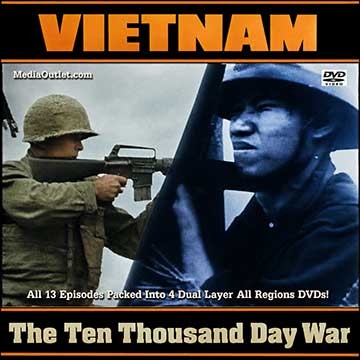
December 13, 1974: The Aftermath Of World
War II: The Cold War: The Cold War In Asia: The Indochina Wars:
The Vietnam War (The Second Indochina War, The Vietnam Conflict,
The Resistance War Against America): The United States In The
Vietnam War: The 1975 Spring Offensive {Vietnamese: Chien Dich Mua
Xuan 1975; officially The General Offensive And Uprising Of Spring
1975 (Vietnamese: Tong Tien Cong Va Noi Day Mua Xuan 1975)}: --
North Vietnam launches its Spring Offensive, which ultimately
results in the capitulation of South Vietnam on April 30, 1975.
The 1975 Spring Offensive was the final North Vietnamese campaign
in the Vietnam War that led to the capitulation of Republic of
Vietnam. After the initial success capturing Phu?c Long Province,
the North Vietnamese leadership increased the scope of The
People's Army Of Vietnam's (PAVN) offensive and captured and held
the key Central Highlands city of Buon Ma Thuot between 10 and 18
March. These operations were intended to be preparatory to
launching a general offensive in 1976. Following the attack on
Buon Ma Thuot, the Republic of Vietnam realized they were no
longer able to defend the entire country and ordered a strategic
withdrawal from the Central Highlands. The retreat from the
Central Highlands, however, was a debacle as civilian refugees
fled under fire with soldiers, mostly along a single highway
reaching from the highlands to the coast. This situation was
exacerbated by confusing orders, lack of command and control, and
a well-led and aggressive enemy, which led to the utter rout and
destruction of the bulk of South Vietnamese forces in the Central
Highlands. A similar collapse occurred in the northern provinces.
Surprised by the rapidity of the ARVN collapse, North Vietnam
transferred the bulk of its northern forces more than 350 miles
(560_km) to the south in order to capture the South Vietnamese
capital of Saigon in time to celebrate their late President Ho Chi
Minh's birthday and end the war. South Vietnamese forces regrouped
around the capital and defended the key transportation hubs at
Phan Rang and Xuan L?c, but a loss of political and military will
to continue the fight became ever more manifest. Under political
pressure, South Vietnamese President Nguy?n Van Thi?u resigned on
21 April, in hopes that a new leader that was more amenable to the
North Vietnamese could reopen negotiations with them. It was,
however, too late. Southwest of Saigon IV Corps, meanwhile,
remained relatively stable with its forces aggressively preventing
VC units from taking over any provincial capitals. With PAVN
spearheads already entering Saigon, the South Vietnamese
government, then under the leadership of Duong Van Minh,
capitulated on April 30, 1975. On Sale @ 15% Off Discount Till
Midnight PT!
https://store.earthstation1.com/vietnam-the-10000-day-war-4-dual-layer-dvds-all-13-10000413.html
Today's
EarthStation1.com 15% Off Commemorative Memorial Title: The
Struggles For Poland TV Series + Bonus MP4 Video Download DVD Set
Today, December 13, 2025
December 13, 1981: Eastern Block
Non-Violent Revolutions: The Labor Union Movement In Poland:
Solidarity (Polish Trade Union) (Independent Self-Governing Trade
Union Solidarity, Solidarnosc): The Polish Crisis Of 1980-1981:
Martial Law In Poland (Polish: Stan Wojenny W Polsce): -- In its
struggle to maintain Communism, General Wojciech Jaruzelski,
acting as head of the Polish government, imposes martial law and
acts to stifle the growing power and actions of the pro-democratic
trade union Solidarity; as soon as martial law comes into effect.
38 regional delegates of the Solidarity Polish Trade Union are
arrested and jailed. Martial Law In Poland (Polish: Stan wojenny w
Polsce) refers to the period between December 13, 1981 and July
22, 1983, when the authoritarian communist government of the
Polish People's Republic drastically restricted everyday life by
introducing martial law and a military junta in an attempt to
throttle political opposition, in particular the Solidarity
Movement. Thousands of opposition activists were imprisoned
without charge, and as many as 91 killed. Although martial law was
lifted in 1983, many political prisoners were not released until a
general amnesty in 1986. Since the 1970s, communist Poland was in
a deep economic recession. The First Secretary Edward Gierek made
large incessant loans from western creditors to achieve a better
economic output that instead resulted in a domestic crisis.
Essential goods were being heavily rationed, which acted as a
stimulus to establish a first anti-communist trade union in the
Eastern Bloc, known as Solidarity, in 1980. Gierek, who permitted
the trade union to appear per the Gdansk Agreement, was dismissed
from his post less than a month later under pressure from the USSR
and confined to house arrest. Poland's already somewhat liberal
policies concerning the opposition were worrisome for hardliners
in the neighbouring Soviet Union. The latter feared that the Poles
might overthrow communism and ally themselves with the Western
Bloc. The Soviets were particularly uneasy as the departure of
Eastern Bloc's most populous nation from Comecon would trigger
further financial and economic problems that would bring an end to
communist rule in Central-Eastern Europe. After a series of
strikes and demonstrations by employees of chief industrial
regions, Poland was directly heading towards bankruptcy. The
Military Council of National Salvation was formed by the new First
Secretary of the Polish United Workers' Party, General Wojciech
Jaruzelski, who was determined to put an end to the demonstrations
and crush the opposition by force if necessary. There is
speculation whether Jaruzelski instigated martial law to prevent
bloodshed if the Soviets and other Warsaw Pact countries were to
enter Poland under the mutual assistance treaty, like in the
Hungarian Revolution Of 1956 and the invasion of Czechoslovakia in
1968. On December 13, 1981, Jaruzelski announced the introduction
of martial law in a televised speech addressed to the entire
nation. The Polish People's Army, Citizens' Militia (MO), ZOMO
special units and tanks rolled onto the streets to scare off
demonstrators, begin regular patrols and maintain curfew.
Intercity travelling was forbidden unless a permit was granted by
the authorities, food shortages intensified and censorship was
placed again on all media and post. The secret services (SB)
wiretapped phones in public booths and state institutions. On
December 16, pro-Solidarity miners organized a strike against the
declaration of martial law at the Wujek Coal Mine in the
industrial city of Katowice. The ZOMO squads, nicknamed "Communist
Gestapo" by the opposition, brutally pacified Wujek, which
resulted in 9 miners' deaths. All other demonstrations across
Poland were met with an armed force, which utilized water cannons,
tear gas, batons, truncheons and clubs to disperse crowds and beat
protesters. Thousands were detained, and some were tortured in
state prisons. On 31 August 1982, in the copper-mining town of
Lubin, three people were mortally wounded. Until the end of the
Martial Law on 22 July 1983, approximately 91 people were killed,
though this figure varies and is still debated among historians.
On Sale @ 15% Off Discount Till Midnight PT!
https://store.earthstation1.com/the-struggles-for-poland-dvd-set-all-9-shows-5-dis95.html
Today's
EarthStation1.com 15% Off Commemorative Memorial Title: Eyes On
The Prize II: America At The Racial Crossroads DVD MP4 USB
Today, December 13, 2025
December 13, 1986: #DOTD: #RIP: Ella
Baker, African American activist civil rights and human rights
activist (b. December 13, 1903) #dies on her 83rd birthday in
Manhattan, New York; the cause of Ella Baker's death is not given
in her biographies or public statements of her death, but it is
likely that she died of old age/natural causes. She is buried in
Flushing Cemetery in Flushing, New York. An extraordinarily
important African American civil rights and human rights activist,
Ella Baker was a largely behind-the-scenes organizer whose career
spanned more than five decades. In New York City and the South,
she worked alongside some of the most noted civil rights leaders
of the 20th century, including W. E. B. Du Bois, Thurgood
Marshall, A. Philip Randolph, and Martin Luther King Jr. She also
mentored many emerging activists, such as Diane Nash, Stokely
Carmichael, and Bob Moses, as leaders in the Student Nonviolent
Coordinating Committee (SNCC). Baker criticized professionalized,
charismatic leadership; she promoted grassroots organizing,
radical democracy, and the ability of the oppressed to understand
their worlds and advocate for themselves. She realized this vision
most fully in the 1960s as the primary advisor and strategist of
the SNCC. Biographer Barbara Ransby calls Baker "one of the
most important American leaders of the twentieth century and
perhaps the most influential woman in the civil rights movement".
She is known for her critiques of both racism in American culture
and sexism in the civil rights movement. On Sale @ 15% Off
Discount Till Midnight PT!
https://store.earthstation1.com/eyes-on-the-prize-ii-dvd-set-4-discs-complete-2nd-seri42.html
Today's
EarthStation1.com #OnThisDay Commemorative Memorial Title: Classic
Movie Trailers & Drive-In Movie Ads DVD, Download, USB Drive
Today, December 13, 2025 December 13: National Cocoa Day: -- An
annual ushering-in of a celebration worthy of the winter holidays!
What better way to warm up after a cold day outside? We make hot
cocoa with cocoa powder, heated milk or water, and sugar. However,
Americans often use hot chocolate and hot cocoa interchangeably,
sometimes causing a bit of confusion. Strictly speaking, there is
a difference between the two beverages. We make hot chocolate by
using ground chocolate containing cocoa butter. We mix it with hot
milk, and it is drinking chocolate. However, hot cocoa is often
sold and marketed as hot chocolate at food venues and stores. Hot
chocolate is also known as drinking chocolate. We make hot cocoa
from cocoa powder. We produce a paste called chocolate liquor
through the fermentation, drying, roasting, and grinding process
of cocoa beans. Through another method, they separate cocoa
butter, leaving cocoa powder. We use this cocoa powder to make hot
cocoa. The result has very little fat and calories. The Mayans are
credited with creating the first chocolate beverage around 2000
years ago. Culturally, cocoa became an essential part of the Aztec
civilization by 1400 AD. After the drink found its way from Mexico
through the New World, Europeans popularized the chocolate drink.
However, it has undergone multiple changes since then. Until the
19th century, drinkers used hot chocolate medicinally to treat
ailments such as stomach diseases. In the United States, an
instant form of the drink is popular. Mixed with hot water or
milk, the packet contains mostly cocoa powder, sugar, and dry
milk. We also like to add marshmallows or whipped cream. It makes
the chocolatey drink creamier and sweeter. What better way to
celebrate National Cocoa Day? The health benefits of drinking hot
cocoa abound. Cocoa contains significant amounts of antioxidants
that may help prevent cancer. They have also shown that the cocoa
bean helps with digestion. The flavonoids found in cocoa also have
a positive effect on arterial health. Chocolate lovers enjoy both
drinking cocoa and hot cocoa in a variety of combinations. Some
top the hot drink with whipped cream or marshmallows. Sprinkle a
dash of cinnamon or peppermint to make the chocolate extra
special. For an added caffeinated boost, some hot cocoa drinkers
add a little bit of instant coffee. The coffee and chocolate
flavors combine for a delicious mocha marriage. Host a cocoa bar
after a day outdoors in the snow. A cup of hot cocoa after
sledding or building a snowman warms us right up. When we gather
around the table and sip our steaming cup, let the conversation
begin.
https://store.earthstation1.com/classic-movie-trailers-and-drivein-movie-ads-dvds-2-disc-se2.html
Today's
EarthStation1.com #OnThisDay Commemorative Memorial Title: TV
Commercials: The Classics Vol. 4 DVD, Video Download, USB Drive
Today, December 13, 2025December 13: National Ice Cream Day: --
You probably won't hear the ice cream truck, with its delightful
tune, roll through your neighborhood today. (There's another
National Ice Cream Day in July for that.) Your favorite ice cream
shop may even be closed for the season! But it's still a perfectly
good reason to get a pint or three (who's counting) of the good
stuff to share with your friends and family. There's no known
inventor that can be credited with creating ice cream,
unfortunately. But the history of ice cream is as rich as gelato.
It's been said that ice cream-like food was first consumed in
China sometime between 618-97 AD. The first dish was made from
flour, buffalo milk, and camphor, an organic compound commonly
used in lotion. It's also been noted that Alexander the Great
adored ice and snow flavored with nectar and honey. We've also
identified that the Bible indicates that King Solomon enjoyed iced
drinks during the harvest season. Speaking of homemade, during the
Roman Empire, Caesar would send people to gather snow from the
mountains, just to cover it in fruit and juices. Close to a
thousand years later in Italy, Marco Polo had returned from the
Far East and bought back a recipe for what we now know as sherbet.
It is assumed that this recipe developed into what we now know as
ice cream which was once called ''Cream Ice.' It was in 1660 that
the general public was presented with ice cream. An Italian man
named Francesco Procopio Dei Coltelli decided to perfect a machine
made by his fisherman grandfather which produced top-quality
gelato in his cafe. The recipe blended milk, butter, eggs, and
cream and was sold in Paris. The first mention of ice cream in the
United States derives from a letter written in Maryland in 1744 by
Governor William Bladen's guest. Then, the New York Gazette on May
12, 1777, printed the first advert for ice cream in the United
States. Following the American Revolution, ice cream became super
popular in the US. Since then ice cream has exploded onto the
desert scene with the creation of home machines, as well as the
emergence of ice cream vans, ice cream floats, sundaes, and
well-known brands like ''Ben and Jerry's'' and ''Haagen-Dazs''
that we still consume to this day. The effect of ice cream on
society is so great, that the brain of an ice cream lover has been
likened to that of an addict. When the brain wants ice cream, it
reacts like a passionate fanatic.
https://store.earthstation1.com/tv-commercials-the-classics-vol-4-dv4.html
Today's
EarthStation1.com #OnThisDay Commemorative Memorial Title:
Menuhin: A Family Portrait: Yehudi Menuhin Biography DVD, MP4, USB
Today, December 13, 2025December 13: National Violin Day: -- An
annual honoring of the bow stringed instrument loved around the
world! Also known as the fiddle, a violin is played by drawing the
bow across the strings. The violinist manipulates the sound in
several ways. A violinist uses numerous bowing techniques to
master the violin. The strokes dictate not only notes, but the
quality of the note played. While we associate the violin with
classical music, it easily crosses genres. For instance, the
violinist demonstrates the versatility of the violin by extensive
use in baroque music, jazz, folk music, rock and roll, and soft
rock. "Violin" comes from the Medieval Latin work
"vitula" which means stringed instrument. Although
having ancient origins, violin-makers developed most of the
violin's modern characteristics in Italy during the 16th century.
Further modifications formed in the 18th and 19th centuries. It is
believed that Turkic and Mongolian horsemen from Inner Asia were
the world's earliest fiddlers. They played two-stringed upright
fiddles strung with horsehair strings. Likewise, they played using
horsehair bows and often featured a carved horse's head at the end
of the neck. The violins we play today (as well as the violas and
cellos) with bows still strung with horsehair are a legacy of the
nomads. The holiday season offers an excellent time to listen to
the violin in concert. Whether you attend a holiday presentation
or give tickets to the local chamber orchestra, the violin will
certainly be a part of the performance. Other ways to enjoy this
holiday include: Listen to concerts online; Attend a school
performance; Re-discover your violin skills and take a lesson or
two; Offer a violin concert to a classroom; Add violin music to
your playlist; Give the gift of music for the holidays. Buy season
tickets or lessons for someone longing to learn to play; And learn
about the histories of musical histories by reading 5 Tuneful
Origins of Celebrated Musical Instruments. While celebrating the
day, be sure to invite someone to enjoy it with you, too! Share
your experience and use #NationalViolinDay to post on social
media!
https://store.earthstation1.com/menuhin-a-family-portrait-dvd-yehudi-menuhin-documentary.html
Today's
EarthStation1.com #OnThisDay Commemorative Memorial Title: Crossed
Sabers: The Story Of The U.S. Horse Cavalry DVD, Download, USB
Today, December 13, 2025December 13: National Horse Day: -- It's
a day to remember the economic, historic, and cultural
contributions that horses have made. Equine enthusiasts across the
country will get together on December 13 to show their
appreciation for these majestic creatures. Whether you're a
seasoned rider or have never been on a horse in your life, check
out some ways you can recognize the day! In 2004, Congress
designated December 13 as National Horse Day and, since then,
Americans have been taking the day to celebrate and appreciate the
role of the horse in not only helping our country become what it
is today, but also its current role in the modern era. Horses, in
general, contribute roughly $9.2 billion to the US economy.
Whether they're helping plow fields; move food and supplies into
rural areas; move livestock in ranches; or just provide sweet,
thoughtful equine therapy; horses have woven themselves into the
fabric of life in America. After the primitive Native American
horses died out between 13,000 and 11,000 years ago, today's
wild-horse species were reintroduced to America by European
colonists in the late 1400s. They've since flourished in the great
plains and mountainous west, where wild herds' thunderous hooves
are still heard to this day. Rodeos are still a vibrant and
celebrated part of the culture of the American west, and, in many
rugged and rural areas, horses are still necessary for getting
work done. While the history of horse day may be new to the
millennium, horses themselves have always been intrinsic to the
lives of many Americans.
https://store.earthstation1.com/crossed-sabers-the-story-of-the-us-horse-cavalry-dvd.html
Today's
EarthStation1.com #OnThisDay Commemorative Memorial Title: The
Divided Union: American Civil War TV Series MP4 Download DVD Set
Today, December 13, 2025December 13, 1862: The American Civil War
(The Civil War, The War Between The States): The Eastern Theater
Of The American Civil War: The Battle Of Fredericksburg: -- #DOTD:
Thomas Reade Rootes Cobb, American slave owner, lawyer, author,
politician, and Confederate States Army general (b. April 10,
1823) #dies when he is killed in The Battle Of Fredericksburg
during the American Civil War. He is the brother of noted
Confederate statesman Howell Cobb. He was wounded in the thigh by
a Union artillery shell that burst inside the Stephens house near
the Sunken Road on Marye's Heights, and he bled to death from
damage to the femoral artery. Some later accounts by veterans
claim that the wounding was by rifle fire and that a Confederate
soldier may have been responsible. He is buried at Oconee Hill
Cemetery in Athens, Georgia.
https://store.earthstation1.com/the-divided-union-american-civil-war-tv-series-3-dual-layer-dvd3.html
Today's
EarthStation1.com #OnThisDay Commemorative Memorial Title: Rowan &
Martin's Laugh-In MegaSet 2 Albums 2 Blooper Sets MP3 MP4 DVD
Today, December 13, 2025December 13, 1981: #DOTD: #RIP: Pigmeat
Markham, African American burlesque and Chitlin' Circuit
entertainer, singer, dancer, and actor, best known as a comedian,
especially for his "Heyeah Come Da Judge" (Here Come Da
Judge) routine, claimed originator of the Truckin' dance (b. April
18, 1904) #dies of a stroke at Montefiore Medical Center in the
Bronx at the age of 77. He is buried in Woodlawn Cemetery in The
Bronx, New York City. He was born Dewey Markham in the community
of Hayti, Durham, North Carolina. His nickname came from a stage
routine, in which he declared himself to be "Sweet Poppa
Pigmeat". His family was the most prominent on their street,
which came to be called (and later officially named) Markham
Street in the Hayti District. Markham began his career in
traveling music and burlesque shows. For a time he was a member of
Bessie Smith's Traveling Revue in the 1920s. Later, he claimed he
originated the Truckin' dance which became nationally popular at
the start of the 1930s, though he most likely is responsible for
popularizing it and giving the dance its name. In the 1940s he
started making film appearances. He was sometimes credited in
films as Pigmeat "Alamo" Markham. In 1946 he recorded
"Open the Door, Richard". Markham was a familiar act at
New York's famed Apollo Theater where he wore blackface makeup and
huge painted white lips, despite complaints the vaudeville
tradition was degrading. The book Showtime at the Apollo suggests,
"He probably played the Apollo more often than any other
performer." Starting in the 1950s Pigmeat Markham began
appearing on television, making multiple appearances on The Ed
Sullivan Show. His boisterous, indecorous "heyeah (here) come
da judge" schtick, which made a mockery of formal courtroom
etiquette, became his signature routine. Markham would sit at an
elevated judge's bench (often in a black graduation cap-and-gown,
to look more impressive), and deal with a series of comic
miscreants. He would often deliver his "judgments", as
well as express frustration with the accused, by leaning over the
bench and smacking the accused with an inflated bladder-balloon.
He had hit comedy recordings in the 1960s on Chess Records, and
saw his routine's entry line become a catchphrase on the Rowan &
Martin's Laugh-In NBC television show, as did his phrase "Look
that up in your Funk and Wagnalls." Markham's most famous
routine was "discovered" by the general public only
after Sammy Davis, Jr. had performed it as a guest on the March
25, 1968 episode of Laugh-In. Due to the years of racial
segregation in the entertainment world, he was not widely known by
white audiences, and had almost exclusively performed on the
"Chitlin' Circuit" of vaudeville, theatres, and night
clubs and appeared in several race films, including William D.
Alexander's 1949 revue film Burlesque in Harlem, which documented
the Chitlin' Circuit. The phenomenal ripple effect of Davis's
version of "the judge" led to Markham's opportunity to
perform his signature Judge character himself as a Laugh-In
regular during the 1968-69 television season. Archie Campbell
later adapted Markham's routine, performing as "Justus
O'Peace," on the country version of Laugh-In, Hee Haw, which
borrowed heavily from the minstrel show tradition. Thanks to his
Heyeah come da judge routine, which originally was accompanied by
music with a funky beat, Pigmeat Markham is regarded as a
forerunner of rap. His song "Here Comes the Judge"
peaked at number 19 on the Billboard and other charts in 1968. He
published an autobiography, Here Come the Judge!, in the wake of
his Laugh-In success.
https://store.earthstation1.com/rowan-and-martin-discount-set-2-albums-2-blooper-reel-sets-mp3-mp4-dvd.html
Today's
EarthStation1.com #OnThisDay Commemorative Memorial Title: Turning
Points Of Second World War Midway El Alamein Stalingrad DVD MP4
USB
Today, December 13, 2025December 13, 1969: #DOTD: #RIP: Raymond
A. Spruance, American admiral and diplomat, United States
Ambassador to the Philippines (b. July 3, 1886) #dies of
Arteriosclerosis in Pebble Beach, California, aged 83. He was
buried with full military honors at Golden Gate National Cemetery
near San Francisco, California. His wife, Margaret Dean
(1888-1985), is buried alongside him, as are Fleet Admiral Chester
Nimitz, his longtime friend Admiral Richmond K. Turner, and
Admiral Charles A. Lockwood, an arrangement made by all of them
while living. Spruance commanded U.S. naval forces during two of
the most significant naval battles that took place in the Pacific
theater, the Battle of Midway and the Battle of the Philippine
Sea. The Battle of Midway was the first major victory for the
United States over Japan and is seen by many as the turning point
of the Pacific war. The Battle of the Philippine Sea was also a
significant victory for the US. The Navy's official historian said
of the Battle of Midway "...Spruance's performance was
superb...(he) emerged from this battle one of the greatest
admirals in American naval history". After the war, Spruance
was appointed President of the Naval War College, and later served
as American ambassador to the Philippines. Spruance was nicknamed
"electric brain" for his calmness even in moments of
supreme crisis, a reputation enhanced by his successful tactics at
Midway. Spruance is the grandfather of theatre and opera director
Anne Bogart, one of the Artistic Directors of SITI Company, which
she founded with Japanese director Tadashi Suzuki in 1992.
https://store.earthstation1.com/turning-points-of-2nd-world-war-midway-el-alamein-stalingrad-dv2.html
Today's
EarthStation1.com #OnThisDay Commemorative Memorial Title: Darrow
(1991) Kevin Spacey TV Docudrama DVD, Video Download, USB Drive
Today, December 13, 2025December 13, 1924: #DOTD: #RIP: Samuel
Gompers, English-born American labor union leader, key figure in
American labor history, founder of the American Federation Of
Labor (b. January 27, 1850) #dies in San Antonio, Texas, after
having collapsed in Mexico City on Saturday, December 6, while
attending a meeting of the Pan-American Federation Of Labor; it
was recognized that his condition was critical and that he might
not survive for long, and as Gompers expressed the desire to die
on American soil, he was placed aboard a special train that sped
toward the border. Gompers was buried at the Sleepy Hollow
Cemetery in Sleepy Hollow, New York, only a few yards away from
industrialist Andrew Carnegie, another important figure of
industry in the Gilded Age. Born Samuel Gumpertz in Spitalfields,
a working class area of the East End of London into a Jewish
family that originally hailed from Amsterdam, Samuel "Sam"
Gompers founded the American Federation Of Labor (AFL), and served
as the organization's president from 1886 to 1894 and from 1895
until his death in 1924. He promoted harmony among the different
craft unions that comprised the AFL, trying to minimize
jurisdictional battles. He promoted thorough organization and
collective bargaining, to secure shorter hours and higher wages,
the first essential steps, he believed, to emancipating labor. He
also encouraged the AFL to take political action to "elect
their friends" and "defeat their enemies". He
mostly supported Democrats, but sometimes Republicans. He strongly
opposed Socialists. During World War I, Gompers and the AFL openly
supported the war effort, attempting to avert strikes and boost
morale while raising wage rates and expanding membership.
https://store.earthstation1.com/darrow-1991-dvd-kevin-spacey-tv-m1991.html
Today's
EarthStation1.com #OnThisDay Commemorative Memorial Title: Exodus:
The Birth Of Israel + Bonus Title DVD, MP4 Download, USB Drive
Today, December 13, 2025December 13, 1949: The Arab-Israeli
Conflict: The Israeli-Palestinian Conflict: Disputed Territories:
Jerusalem: The Status Of Jerusalem: -- The Knesset votes to move
the capital of Israel to Jerusalem. From 1949 until 1967, West
Jerusalem served as Israel's capital, but was not recognized as
such internationally because UN General Assembly Resolution 194
envisaged Jerusalem as an international city. As a result of the
Six-Day War in 1967, the whole of Jerusalem came under Israeli
control. On June 27, 1967, the government of Levi Eshkol extended
Israeli law and jurisdiction to East Jerusalem, but agreed that
administration of the Temple Mount compound would be maintained by
the Jordanian waqf, under the Jordanian Ministry of Religious
Endowments. The Oslo Accords stated that the final status of
Jerusalem would be determined by negotiations with the Palestinian
Authority. The accords banned any official Palestinian presence in
the city until a final peace agreement, but provided for the
opening of a Palestinian trade office in East Jerusalem. The
Palestinian Authority regards East Jerusalem as the capital of a
future Palestinian state. President Mahmoud Abbas has said that
any agreement that did not include East Jerusalem as the capital
of Palestine would be unacceptable. Israeli Prime Minister
Benjamin Netanyahu has similarly stated that Jerusalem would
remain the undivided capital of Israel. Due to its proximity to
the city, especially the Temple Mount, Abu Dis, a Palestinian
suburb of Jerusalem, has been proposed as the future capital of a
Palestinian state by Israel. Israel has not incorporated Abu Dis
within its security wall around Jerusalem. The Palestinian
Authority has built a possible future parliament building for the
Palestinian Legislative Council in the town, and its Jerusalem
Affairs Offices are all located in Abu Dis.
https://store.earthstation1.com/exodus-the-birth-of-israel-dvd-history-of-zionism.html
Today's
EarthStation1.com #OnThisDay Commemorative Memorial Title: Outer
Space Films 5: Apollo Moon Exploration Films DVD, Download, USB
Today, December 13, 2025December 13, 1972: Moonwalks: The History
Of Rocketry: The History Of Spaceflight: The Aftermath Of World
War II: The Cold War: The Space Age: The Space Race: Space
Programs Of The United States: Human Spaceflight Programs: The
Discovery And Exploration Of The Solar System: Missions To The
Moon: Project Apollo: Apollo 17: -- Eugene Cernan and Harrison
Schmitt begin the third and final extra-vehicular activity (EVA)
or "Moonwalk" of Apollo 17, and as such, they are the
last humans to set foot on the Moon of Project Apollo.. Launched
at 12:33 a.m. EST on December 7, 1972, with a crew made up of
Commander Eugene Cernan, Command Module Pilot Ronald Evans, and
Lunar Module Pilot Harrison Schmitt, it was the last use of Apollo
hardware for its original purpose; after Apollo 17, extra Apollo
spacecraft were used in the Skylab and Apollo-Soyuz programs.
Apollo 17 was the first night launch of a U.S. human spaceflight
and the final manned launch of a Saturn V rocket. It included
three days on the lunar surface, extended scientific capability,
and the third Lunar Roving Vehicle (LRV). While Evans remained in
lunar orbit in the Command/Service Module (CSM), Cernan and
Schmitt spent just over three days on the moon in the
Taurus-Littrow valley and completed three moonwalks, taking lunar
samples and deploying scientific instruments. Evans took
scientific measurements and photographs from orbit using a
Scientific Instruments Module mounted in the Service Module. The
landing site was chosen with the primary objectives of Apollo 17
in mind: to sample lunar highland material older than the impact
that formed Mare Imbrium, and investigate the possibility of
relatively new volcanic activity in the same area. Cernan, Evans
and Schmitt returned to Earth on December 19 after a 12-day
mission. Apollo 17 is the most recent manned Moon landing and was
the last time humans travelled beyond low Earth orbit. It was also
the first mission to have no one on board who had been a test
pilot; X-15 test pilot Joe Engle lost the lunar module pilot
assignment to Schmitt, a scientist. The mission broke several
records: the longest moon landing, longest total extravehicular
activities (moonwalks), largest lunar sample, and longest time in
lunar orbit.
https://store.earthstation1.com/outer-space-films-5-apollo-moon-exploration-dv5.html
Today's
EarthStation1.com #OnThisDay Commemorative Memorial Title: Triumph
Of The West 13 Part TV Documentary Series DVD, Download, USB
Today, December 13, 2025December 13, 1466: #DOTD: #RIP:
Donatello, Florentine Italian painter and sculptor (b. c. 1386)
#dies of unknown causes in his native Republic Of Florence, aged
79-80. He is buried in the Basilica Di San Lorenzo in Florence,
Italy. When he died, the "sweet style" that he had
helped to produce decades before, dominated in the work of
Florentine sculptors; his "late style", with its
boldness of imagination and execution, probably overawed them and
seemed incomprehensible and inaccessible". Only many years
later did Verrocchio and Antonio del Pollaiuolo explore similar
expressive effects. Donatello was born Donato Di Niccolo Di Betto
Bardi in The Republic Of Florence (present-day Italian Republic).
He studied classical sculpture and used this to develop a complete
Renaissance style in sculpture. He spent time in other cities, and
while there he worked on commissions and taught others; his
periods in Rome, Padua, and Siena introduced to other parts of
Italy his techniques, developed in the course of a long and
productive career. Financed by Cosimo De' Medici, Donatello's
David was the first freestanding nude male sculpture since
antiquity. He worked with stone, bronze, wood, clay, stucco, and
wax, and had several assistants, with four perhaps being a typical
number. Although his best-known works mostly were statues in the
round, he developed a new, very shallow, type of bas-relief for
small works, and a good deal of his output was larger
architectural reliefs.
https://store.earthstation1.com/triumph-of-the-west-tv-series-5-dual-layer-dvds-all-13-sh513.html
Today's
EarthStation1.com #OnThisDay Commemorative Memorial Title:
Hitler's Henchmen: The Leaders Of Nazi Germany DVD, MP4, USB Drive
Today, December 13, 2025December 13, 1797: #BOTD: #HBD! Heinrich
Heine, German journalist, poet, essayist, and literary critic (d.
February 17, 1856) is #born Harry Heine in Dusseldorf, in what was
then the Duchy of Berg, Holy Roman Empire (modern Germany) into a
Jewish family. Christian Johann Heinrich Heine is best known
outside of Germany for his early lyric poetry, which was set to
music in the form of Lieder (art songs) by composers such as
Robert Schumann and Franz Schubert. In 1824, Heinrich Heine wrote
one of his most famous poems, "Die Lorelei". It
describes the mythical female as a sort of siren who, sitting on
the cliff above the Rhine and combing her golden hair, unwittingly
distracted shipmen with her beauty and song, causing them to crash
on the rocks. Heine's later verse and prose are distinguished by
their satirical wit and irony. While Heine is of the Romantic
movement, he is also part of the Young Germany movement, a
politically progressive youth ideology that produced poets,
thinkers and journalists, all of whom reacted against the
introspection and particularism of Romanticism in the national
literature, which had resulted in a total separation of literature
from the actualities of life. The Romantic Movement was considered
apolitical, lacking the activism that Germany's burgeoning
intelligentsia required. As a result of the decades of compulsory
school attendance in German states, mass literacy meant an excess
of educated males which the establishment could not subsume. Thus
in the 1830s, with the advantage of inexpensive printing presses,
there was a rush of educated males into the so-called free
professions. Heine's own radical political views led to many of
his works being banned by German authorities. Heine spent the last
25 years of his life as an expatriate in Paris, where in May 1848
he suddenly fell paralyzed and had to be confined to bed. He would
not leave what he called his "mattress-grave"
(Matratzengruft) until his death eight years later. He also
experienced difficulties with his eyes. It had been supposed for
many years that he suffered from multiple sclerosis or syphilis,
but in 1997 it was confirmed through an analysis of the poet's
hair that he had suffered from chronic lead poisoning. He bore his
sufferings stoically and he won much public sympathy for his
plight. Heine's writings were abhorred by the Nazis and one of its
political mouthpieces, the Volkischer Beobachter, made noteworthy
efforts to attack him in their periodical. Within the pantheon of
the "Jewish cultural intelligentsia" chosen for
anti-Semitic demonization, perhaps nobody was the recipient of
more National Socialist vitriol than Heinrich Heine. When a
memorial to Heine was completed in 1926, the paper lamented that
Hamburg had erected a "Jewish Monument to Heine and
Damascus... one in which Alljuda ruled!". Editors for the
Volkischer Beobachter referred to Heine's writing as degenerate on
multiple occasions as did Nazi Party ideologist Alfred Rosenberg.
Correspondingly, during the rise of the Third Reich, Heine's
writings were banned and burned. Heinrich Heine died in Paris aged
58, most likely caused by chronic lead poisoning, and was interred
in The Paris Cimetiere De Montmartre.
https://store.earthstation1.com/hitler39s-henchmen-the-leaders-of-nazi-germany-dvd-mp4-394.html
Today's
EarthStation1.com #OnThisDay Commemorative Memorial Title:
Caracol: The Lost Maya City + 2 Maya Bonuses MP4 Video Download
DVD
Today, December 13, 2025December 13, 1908: #DOTD: #RIP: Augustus
Le Plongeon, British-born French-American archeologist,
photographer, historian, Mesoamericanist, new age mystic, Mayanist
and Freemason who studied the pre-Columbian ruins of America,
particularly those of the Maya civilization on the northern
Yucatan Peninsula (b. May 4, 1825) #dies in Brooklyn in 1908 at
the age of eighty-three; his wife Alice Dixon, his collaborator,
followed in 1910 at the age of fifty-nine, presumably of a broken
heart. His burial details are not publicly disclosed. Born
Augustus Henry Julian Le Plongeon on the isle of Jersey, his
writings contain many notions that were not well received by his
contemporaries, much of which was later disproven. Augustus Le
Plongeon and his wife Alice Dixon left a lasting legacy in the
photographs they toook documenting the ancient ruins. He was one
of the earliest proponents of Mayanism. a modern non-codified
eclectic collection of New Age beliefs, influenced in part by
Pre-Columbian Maya mythology and some folk beliefs of the modern
Maya peoples. Le Plongeon insisted that the symbols of Freemasonry
could be traced to the ancient Maya and that the ancient knowledge
had come to ancient Egypt from the ancient Maya by way of
Atlantis. He and Alice constructed an imaginative "history,"
with the Maya sites in Yucatan being the cradle of civilization,
with civilization then traveling east first to Atlantis and later
to Ancient Egypt. The Le Plongeons named kings and queens of these
dynasties and said that various artworks were portraits of such
ancient royalty (such as the famous Chacmool, which the couple
excavated at Chichen Itza). The Le Plongeons reconstructed a
detailed but fanciful story of Queen Moo and Prince Coh (also
known as "Chac Mool") in which Prince Coh's death
resulted in the erection of monuments in his honor (similar to the
commemoration of Prince Albert by Queen Victoria). While most of
Le Plongeon's contemporaries dismissed his theories, individuals
such as Ignatius L. Donnelly and Helena Blavatsky drew upon Le
Plongeon's research for their own theories. Augustus spent the
remainder of his life in Brooklyn, New York, writing about the
connections between Maya and Egypt and defending himself against
detractors. A collection of the works of the Le Plongeons
currently resides at the Getty Research Institute in Los Angeles.
The archive contains original records covering their travels from
the 1860s through the early 1900s, including diaries, unpublished
scholarly manuscripts and notes, correspondence, and extensive
photographic documentation of ancient architecture and sculpture,
city views, and ethnographic studies. Le Plongeon was elected a
member of the American Antiquarian Society in 1878.
https://store.earthstation1.com/caracol-the-lost-maya-cityapocalypse-then-fall-of-the-maya-dvd.html
Today's
EarthStation1.com #OnThisDay Commemorative Memorial Title: The War
In Korea 2 Part TV Series w/ Kirk Douglas DVD, MP4, USB Drive
Today, December 13, 2025December 13, 1991: Korea: The History Of
Korea: The Aftermath Of World War II: The Cold War: The Cold War
In Asia: The Korean Conflict: The Cold War (1947-1953): The Cold
War In Asia: The Korean War: -- Leaders of North and South Korea
sign a treaty of reconciliation and nonaggression in Seoul, South
Korea, which also formally ended the Korean War, although actual
fighting had ceased in 1953. The agreement sought to re-establish
some measure of regular communication between the two countries,
including telephone lines, mail, some economic exchanges and the
reunion of some families who have been separated since war broke
out in 1950. It also committed the countries to rebuilding railway
and road links across the heavily guarded border, known as the
Demilitarized Zone, which has been the symbol of the armed
division of the country for almost four decades. Officials on both
sides described the accord as the first step toward what they term
the inevitable reunification of the Korean peninsula, but they
conceded that it failed to deal with some of the most potentially
dangerous issues dividing North and South, including Pyongyang's
race to develop an arsenal of nuclear weapons. Lee Dong Bok, South
Korea's chief spokesman, termed the agreement "a historical
milestone and an evolution in inter-Korean relations." In the
accord, the two sides agreed to forswear all acts of terrorism or
any efforts to overthrow the government of the other. They stopped
short, however, of calling the agreement a peace treaty, saying
that the armistice agreement signed in 1953 between the
American-led United Nations forces and the army of North Korean
President Kim Il Sung would remain in effect until it could be
transformed into a formal peace.
https://store.earthstation1.com/the-war-in-korea-dvd-2-part-tv-series-2-dis22.html
Today's
EarthStation1.com #OnThisDay Commemorative Memorial Title: The
Avant-Garde In Russia 1910-1930 TV Series DVD, Download, USB Drive
Today, December 13, 2025December 13, 1944: #DOTD: #RIP: Wassily
Kandinsky, Russian-French abstract artist, painter, art theorist,
mystic and Theosophist (b. December 16, 1866) #dies at the age of
77 in Neuilly-Sur-Seine, known as Neuilly, a commune in the
department of Hauts-De-Seine in France, just west of Paris. He is
buried in Neuilly-Sur-Seine New Communal Cemetery. Born Wassily
Wassilyevich Kandinsky in Moscow, Russian Empire, Kandinsky is
generally credited as the pioneer of abstract art, which uses
visual language of shape, form, color and line to create a
composition which may exist with a degree of independence from
visual references in the world. In the late 19th century in
Eastern Europe, mysticism and early modernist religious philosophy
as expressed by Mme. Blavatsky (1831-1891), the best-known
exponent of theosophy, had a profound impact on pioneer geometric
artists like Wassily Kandinsky and Hilma af Klint. Kandinsky was
personally spiritually influenced by Madame Blavatsky.
Theosophical theory postulates that creation is a geometrical
progression, beginning with a single point. The creative aspect of
the form is expressed by a descending series of circles, triangles
and squares. Kandinsky's book Concerning the Spiritual in Art
(1910) and Point and Line to Plane (1926) echoed this theosophical
tenet. Illustrations by John Varley in Thought-Forms (1901)
influenced him visually. He likewise was influenced by Richard
Wagner's Lohengrin which, he felt, pushed the limits of music and
melody beyond standard lyricism. Kandinsky spent his childhood in
Odessa (today Ukraine), where he graduated at Grekov Odessa Art
school. He enrolled at the University of Moscow, studying law and
economics. Successful in his profession - he was offered a
professorship (chair of Roman Law) at the University of Dorpat
(today Tartu, Estonia) - Kandinsky began painting studies
(life-drawing, sketching and anatomy) at the age of 30. In 1896,
Kandinsky settled in Munich, studying first at Anton Azbe's
private school and then at the Academy of Fine Arts. He returned
to Moscow in 1914, after the outbreak of World War I. Following
the Russian Revolution, Kandinsky became an insider in the
cultural administration of Anatoly Lunacharsky, a Russian Marxist
revolutionary and the first Bolshevik Soviet People's Commissar
(Narkompros) responsible for Ministry and Education, as well as an
active playwright, critic, essayist and journalist throughout his
career. With Lunacharsky's support, Kadinsky helped establish the
Museum of the Culture of Painting. However, by then his spiritual
outlook came into conflict with the argumentative materialism of
Soviet society", and opportunities beckoned in Germany, to
which he returned in 1920. There he taught at the Bauhaus school
of art and architecture from 1922 until the Nazis closed it in
1933. He then moved to France, where he lived for the rest of his
life, becoming a French citizen in 1939 and producing some of his
most prominent art. He died in Neuilly-sur-Seine in 1944.
https://store.earthstation1.com/the-avantgarde-in-russia-19101930-dvd-art-doc19101930.html
Today's
EarthStation1.com #OnThisDay Commemorative Memorial Title: UFOs:
The First Encounters Ancient Aliens MP4 Video Download DVD
Today, December 13, 2025December 13, 1947: #DOTD: #RIP: Nicholas
Roerich, Russian archaeologist, painter, stage designer,
philosopher, writer, occultist, Theosophist, Vedantist, Buddhist
and public figure who in his youth was influenced by a movement in
Russian society around the spiritual (b. October 9, 1874) #dies in
Kullu, Naggar, Dominion of India (present-day Himachal Pradesh,
India) at the age of 73. He is buried at the Roerich Memorial
Cemetery in Shimla, Himachal Pradesh, India. Also known as Nikolai
Konstantinovich Rerikh, he was interested in hypnosis and his
paintings are said to have hypnotic expression. Born Nicholas
Konstantinovich Roerich in Saint Petersburg, Russia to a
well-to-do notary public Baltic German father and a Russian
mother, Roerich lived in various places around the world. Trained
as an artist and a lawyer, his main interests were literature,
philosophy, archaeology, and especially art. Roerich was a
dedicated activist for the cause of preserving art and
architecture during times of war. He was nominated several times
to the longlist for the Nobel Peace Prize. The so-called Roerich
Pact was signed into law by the United States and most nations of
the Pan-American Union (now known as The Organization of American
States (OAS or OEA)) in April 1935. An inter-American treaty, the
most important idea of The Treaty on the Protection of Artistic
and Scientific Institutions and Historic Monuments or Roerich Pact
is the legal recognition that the defense of cultural objects is
more important than the use or destruction of that culture for
military purposes, and the protection of culture always has
precedence over any military necessity. Raised in
late-19th-century St. Petersburg, Roerich enrolled simultaneously
at St. Petersburg University and the Imperial Academy of Arts
during 1893. He received the title of "artist" in 1897
and a degree in law the next year. He found early employment with
the Imperial Society for the Encouragement of the Arts, whose
school he directed from 1906 to 1917. Despite early tensions with
the group, he became a member of Sergei Diaghilev's "World of
Art" society; he was president of the society from 1910 to
1916. Artistically, Roerich became known as his generation's most
talented painter of Russia's ancient past, a topic that was
compatible with his lifelong interest in archaeology. He also
succeeded as a stage designer, achieving his greatest fame as one
of the designers for Diaghilev's Ballets Russes. His best-known
designs were for Borodin's Prince Igor (1909 and later
productions), and costumes and set for The Rite of Spring (1913),
composed by Igor Stravinsky. Along with Mikhail Vrubel and Mikhail
Nesterov, Roerich is considered a major representative of Russian
Symbolism in art. From an early period of his life, he was
influenced by apocrypha and medieval sectarian writings such as
the mysterious Dove Book. Another of Roerich's artistic subjects
was architecture. His acclaimed publication "Architectural
Studies" (1904-1905), consisting of dozens of paintings he
made of fortresses, monasteries, churches, and other monuments
during two long trips through Russia, inspired his decades-long
career as an activist on behalf of artistic and architectural
preservation. He also designed religious art for places of worship
throughout Russia and Ukraine, most notably the Queen of Heaven
fresco for the Church of the Holy Spirit which the patroness Maria
Tenisheva built near her Talashkino estate; and the stained glass
windows for the Datsan Gunzechoinei during 1913-1915. His designs
for the Talashkino church were so radical that the Orthodox church
refused to consecrate the building. During the first decade of the
1900s and in the early 1910s, Roerich, largely due to the
influence of his wife Helena, developed an interest in eastern
religions, as well as alternative (to Christianity) belief systems
such as Theosophy. Both Roerichs became avid readers of the
Vedantist essays of Ramakrishna and Vivekananda, the poetry of
Rabindranath Tagore, and the Bhagavad Gita. The Roerichs'
commitment to occult mysticism increased steadily. It was
especially intense during World War I and the Russian revolutions
of 1917, to which the couple, like many Russian intellectuals,
accorded apocalyptic significance. The influence of Theosophy,
Vedanta, Buddhism, and other mystical topics can be detected not
only in many of Roerich's paintings, but in the many short stories
and poems Roerich wrote before and after the 1917 revolutions,
including the Flowers of Morya cycle, begun in 1907 and completed
in 1921. In 1934-1935, the U.S. Department of Agriculture, then
headed by Roerich admirer Henry A. Wallace, sponsored an
expedition by Roerich and USDA scientists H. G. MacMillan and
James F. Stephens to Inner Mongolia, Manchuria, and China. The
expedition's exoteric purpose was to collect seeds of plants which
prevented soil erosion, which it succeeded in doing; its esoteric
purpose was to seek out the mythical Shambhala (Shamballah,
Shambala, Shangri-La, (also known as 'The City Of Enoch'). The
expedition consisted of two parts. In 1934, they explored the
Greater Khingan mountains and Bargan plateau in western Manchuria.
In 1935, they explored parts of Inner Mongolia: the Gobi Desert,
Ordos Desert, and Helan Mountains. The expedition found almost 300
species of xerophytes, collected herbs, conducted archeological
studies, and found antique manuscripts of great scientific
importance.
https://store.earthstation1.com/ufo39s-the-first-encounters-ancient-aliens-mp4-video-download-394.html
Today's
EarthStation1.com #OnThisDay Commemorative Memorial Title: King Of
Jazz 1930 Paul Whiteman John Boles Laura La Plante DVD MP4 USB
Today, December 13, 2025December 13, 1962: #DOTD: #RIP: Harry
Barris, American popular singer, songwriter and actor, one of the
earliest singers to use "scat singing" in recordings (b.
November 24, 1905) #dies in Burbank, California, aged 57. Barris
had a lifelong drinking problem. In a fall, he fractured his hip
in March 1961. Despite a series of operations, his condition
deteriorated. He died in Burbank, California, aged 57. He is
buried at Forest Lawn Memorial Park cemetery in Hollywood Hills,
Los Angeles County, California. His composition "Never Been
So Lost" was published shortly before his death. Harry Barris
was born to Jewish parents in New York City. Barris was one of
Paul Whiteman's Rhythm Boys, along with Bing Crosby and Al Rinker,
and they scatted on several of Paul Whiteman's jazz recordings,
including "Mississippi Mud," which Barris wrote in 1927.
He was educated in Denver, Colorado. Barris became a professional
pianist at the age of 14. He led a band which toured the Far East
at the age of 17. Barris married Hazelle Thompson in 1925 and they
had a daughter, Hazelle Barris, in 1926. The same year, Barris
played the piano and occasionally sang in Paul Ash's orchestra. In
the same year, Al Rinker and Bing Crosby became members of Paul
Whiteman's Orchestra as a singing duo. However, appearing at the
vast New York Paramount in February 1927, where there were no
microphones, they could not be heard by the audience. They were
promptly dropped from the bill. However, a band member who knew
Barris suggested that they add him to make a trio and The Rhythm
Boys were formed in April 1927. The Rhythm Boys made a number of
important recordings with Paul Whiteman beginning in 1927, many
with Bix Beiderbecke on cornet. They appeared with Paul Whiteman
in his 1930 American pre-Code color musical milestone film "The
King Of Jazz". In 1930, Barris divorced Hazelle Thompson. The
Rhythm Boys left Paul Whiteman the same year and joined Gus
Arnheim's Cocoanut Grove Orchestra. They made one more recording
together, "Them There Eyes" (November 20, 1930), but the
boys decided to quit in May 1931 and they went their separate
ways. However, Barris changed his mind and returned to the
Cocoanut Grove to complete his contract. Barris joined Arnheim's
singing group The Three Ambassadors. Barris met Loyce Whiteman,
who also sang with the Orchestra, and married her in 1931. They
appear together in an episode of Rambling 'Round Radio Row. They
had one daughter, Marti Barris, who also became a musician. They
divorced in 1946. Barris appeared in 57 films between 1931 and
1950, usually as a band member, pianist and/or singer. Seven of
those films had Bing Crosby as the star. In 1932, Barris signed a
contract to star in six shorts for Educational Pictures, similar
to Bing Crosby's launch into films. The first of these shorts was
That Rascal. In The Lost Weekend (1945), he is the nightclub
pianist who humiliates Ray Milland by singing "Somebody Stole
My Purse". An unusual change of pace for Barris was his
comedy role in The Fleet's In (1942), as a runty sailor named Pee
Wee who perpetrates malapropisms in a surprisingly deep voice.
During World War II, Barris, along with Joe E. Brown, went
overseas to entertain troops.
https://store.earthstation1.com/king-of-jazz-1930-paul-whiteman-john-boles-laura-la-plante-dvd-mp19304.html
Today's
EarthStation1.com #OnThisDay Commemorative Memorial Title: TV
Music & Dance Shows #7 Shindig Hullabaloo DVD, MP4, USB Flash
Drive
Today, December 13, 2025December 13, 2002: #DOTD: #RIP: Zal
Yanovsky, Canadian folk-rock singer, songwriter, restauranteur and
guitarist for The Lovin' Spoonful (b. December 19, 1944) #dies in
Kingston, Ontario from a heart attack, six days shy of his 58th
birthday. A funeral service was held in Kingston, Ontario on
December 16, 2002. His remains were cremated; the final
disposition of his ashes are not publicly disclosed. Zal Yanovsky
was born Zalman Yanovsky in Toronto, Ontario, Canada. He was the
son of political cartoonist Avrom Yanovsky. He played lead guitar
and sang for the Lovin' Spoonful, a rock band which he founded
with John Sebastian in 1964. He was inducted into the Canadian
Music Hall of Fame in 1996. He was married to actress Jackie
Burroughs, with whom he had one daughter, Zoe. One of the early
rock and roll performers to wear a cowboy hat, and fringed "Davy
Crockett" style clothing, Zal helped set the trend followed
by such 1960s performers as Sonny Bono, Johnny Rivers, and David
Crosby. Mostly self-taught, he began his musical career playing
folk music coffee houses in Toronto. He lived on a kibbutz in
Israel for a short time before returning to Canada. He teamed with
fellow Canadian Denny Doherty in the Halifax Three. The two joined
Cass Elliot in the Mugwumps, a group mentioned by Doherty's and
Cass's later group the Mamas & the Papas in the song "Creeque
Alley". It was at this time that he met John Sebastian, and
they formed the Lovin' Spoonful with Steve Boone and Joe Butler.
According to Sebastian: "He could play like Elmore James, he
could play like Floyd Cramer, he could play like Chuck Berry. He
could play like all these people, yet he still had his own
overpowering personality. Out of this we could, I thought, craft
something with real flexibility." In 1966, he was arrested in
the United States on a marijuana-related charge. In exchange for
not being deported, Yanovsky gave his dealer's name, and as a
consequence, he was ostracized by the music community. Returning
to his native Canada, he recorded the solo album Alive and Well in
Argentina (and Loving Every Minute of It). Buddah Records released
the album in the U.S. in 1968, along with "As Long as You're
Here", a single that did not appear on the album. The single
(on which the B-side was the same track without vocals and
recorded backwards) just missed the Billboard Hot 100, but fared a
little better in Cashbox, peaking at #73, and reaching #57 in the
Canadian RPM Magazine charts. Kama Sutra Records reissued the
album in 1971 with a completely different cover and the inclusion
of "As Long as You're Here". While a member of Kris
Kristofferson's backing band at the Isle of Wight Festival 1970,
he had a brief reunion with John Sebastian; Sebastian had been
(apparently) unaware of Yanovsky's presence, and was made aware by
a message passed through the crowd, written on a toilet roll. He
also appeared in the Off-Broadway show "National Lampoon's
Lemmings" at New York's Village Gate. Although not an
original cast member, he contributed a musical number "Nirvana
Banana", a Donovan parody. After retiring from the music
business, Yanovsky became a chef and restaurateur, establishing,
alongside his second wife Rose Richardson, Chez Piggy restaurant
in 1979 and Pan Chancho Bakery in 1994, both in Kingston, Ontario.
He had worked as a chef at The Golden Apple (in Gananoque,
Ontario) and, in the mid-'70s, at Dr. Bull's (in Kingston). The
success of Chez Piggy prompted the publication of a companion
cookbook (The Chez Piggy Cookbook, Firefly Books, 1998) that was
collected by fans. After Zal's death of an apparent heart attack
in December 2002, and Richardson's death in 2005, his daughter Zoe
Yanovsky (with actress Jackie Burroughs) took over the ownership
of both eateries. Zoe also completed and launched another cookbook
that Zal was working on, titled The Pan Chancho Cookbook
(Bookmakers Press, 2006).
https://store.earthstation1.com/classic-tv-music-amp-dance-shows-7-shindig-hullabaloo-medley-dv7.html
Today's
EarthStation1.com #OnThisDay Commemorative Memorial Title: DJ
Madness! 1950s-60s-70s Radio Shows DVD, MP3 Download, USB Drive
Today, December 13, 2025December 13, 1953: #BOTD: #HBD: Berton
Averre, American lead guitarist co-founder of the band The Knack,
is #born Berton Leslie Averre in Van Nuys, Los Angeles,
California. The Knack had a No. 6 UK / No. 1 US hit with "My
Sharona", which sold 10 million copies in the US. Averre is
also a vocal arranger, and has toured with Robby Krieger, Bette
Midler, The Cowsills and Sarah Brightman. In the 1990s, he turned
his creative energies towards the theater and developed a
screenplay with Tom Schulman, screenwriter of Dead Poets Society
and What About Bob?. In 1993, he joined the Lehman Engel Musical
Theatre Workshop in Los Angeles, where he met Rob Meurer. As a duo
with Averre as composer, Meurer as lyricist, and both as book
writers, they have written three musical comedies. The first, The
Party's Over, received productions in Chicago and La Mirada. The
second, Jungle Man!, has had two hit productions at Stage One in
Wichita, in 2000 and 2002. The third, Robin Hood: The Untold
Story, was the hit of the ASCAP/Disney Workshop in 2001, and has
been seen in Los Angeles, Chicago, and Long Beach. Averre and
Meurer have written two more shows in collaboration with
playwright Mark Saltzman. Setup & Punch premiered in the
summer of 2009 at The Blank Theater in Hollywood, and received a
nomination by L.A. Weekly for Best New Musical. The show featured
in a public staged reading on October 13, 2010 at the York Theater
in New York. The trio's other show, the musical Vrooom!, had
readings in New York in early 2011.
https://store.earthstation1.com/dj-radio-airchecks-mp3-dvd-1950s60s70s-dis319506070.html
Today's
EarthStation1.com #OnThisDay Commemorative Memorial Title: Douglas
MacArthur Documentaries Set DVD, Video Download, USB Drive
Today, December 13, 2025December 13, 1908: #BOTD: #HBD! Van
Heflin, American theatre, radio and film actor and narrator (d.
July 23, 1971) is #born Emmett Evan Heflin Jr. in Walters,
Oklahoma. He played mostly character parts over the course of his
film career, but during the 1940s had a string of roles as a
leading man. Heflin won the Academy Award for Best Supporting
Actor for his performance in Johnny Eager (1942). He also had
memorable roles in Westerns such as Shane (1953), 3:10 to Yuma
(1957), and Gunman's Walk (1958). Van Heflin died at Cedars of
Lebanon Hospital in Los Angeles at 6:43 am of a heart attack while
swimming in a pool seven weeks prior, when he lost and never
regained consciousness, aged 62. He left instructions forbidding a
public funeral. Instead, his cremated remains were scattered in
the ocean.
https://store.earthstation1.com/general-douglas-macarthur-dvd-korea-wwii-documentaries.html
Today's
EarthStation1.com #OnThisDay Commemorative Memorial Title: Color
Adjustment 40 Years Of Black America On Broadcast TV DVD MP4 USB
Today, December 13, 2025December 13, 2016: #DOTD: #RIP: Alan
Thicke, Canadian-American comedy writer, actor, composer,
songwriter, producer, game show host and talk show host, best
known for playing Dr. Jason Seaver on the 1980s sitcom Growing
Pains on ABC (b. March 1, 1947) #dies of type A (ascending aortic)
Aortic dissection (a spllitting of the aorta, the main and largest
artery in the human body, originating from the left ventricle of
the heart and extending down to the abdomen) at the Providence
Saint Joseph Medical Center in Burbank, at the age of 69. That
day, Thicke collapsed while playing ice hockey with his son Carter
at Pickwick Gardens in Burbank, California. The manager of the
rink said he was talking and even joked to his son to take a photo
as he was being wheeled out on a stretcher, and died later that
day. On December 19, 2016, the cast of Growing Pains, including
Leonardo DiCaprio, reunited at Thicke's funeral; a eulogy was
given by his friend Bob Saget, and his son, Robin, offered a
humorous remembrance. He is buried at Santa Barbara Cemetery in
Santa Barbara, California. Alan Thicke was born Alan Willis
Jeffrey in Kirkland Lake, Ontario, the son of Shirley "Joan"
Isobel Marie (nee Greer), a nurse, and William Jeffrey, a
stockbroker; they divorced in 1953, an his mother married Brian
Thicke, a physician. Alan Thicke was also a writer and producer
for a number of Norman Lear television productions, including
Fernwood 1 Night, America 2 Night Tonight and Good Times. In 2013,
Thicke was inducted into Canada's Walk of Fame. Alan Thicke is the
father of singer Robin Thicke.
https://store.earthstation1.com/color-adjustment-40-years-of-black-americans-on-tv-dvd-download-u40.html
Today's
EarthStation1.com #OnThisDay Commemorative Memorial Title:
Pimpernel Smith (1941) Leslie Howard DVD, MP4 Download, USB Drive
Today, December 13, 2025December 13, 1915: #BOTD: #HBD! Mary
Morris, British actress (d. October 14, 1988) is #born Mary Lilian
Agnes Morris in Lautoka, Fiji, the daughter of Herbert Stanley
Morris, a botanist, and his wife, Sylvia Ena de Creft-Harford. She
trained at the Royal Academy of Dramatic Art. Morris made her
debut in Lysistrata at the Gate Theatre, London in 1935. She
performed with Leslie Howard in "Pimpernel" Smith (1941)
and Anna Petrovitch in the Ealing war movie Undercover (1943) as
the wife of a Serbian guerrilla leader. On television, she played
Professor Madeleine Dawnay in the science-fiction television drama
A for Andromeda (and its sequel, The Andromeda Breakthrough),
Queen Margaret in the BBC's An Age of Kings (a version of
Shakespeare's History Plays), Lady Macbeth in the 1960 radio
production of Macbeth, and Cleopatra in Antony and Cleopatra (as
part of the BBC's adaptation of Shakespeare's Roman plays, The
Spread of the Eagle) in 1963. She played Number Two in The
Prisoner's episode "Dance of the Dead". After an absence
of many years, she reappeared in diverse film roles such as Madame
Fidolia the Russian ballerina and theatre school director in the
BBC television serial Ballet Shoes (1975), and the mother of the
murdered boy in the 1977 horror film Full Circle. She also
appeared on television in Doctor Who in the story Kinda (1982),
playing the pivotal role of the shaman Panna opposite Peter
Davison. Her other television appearances included the Countess
Vronsky in the BBC's Anna Karenina (1977); the macabre, ancient
relative in the Walter de la Mare story Seaton's Aunt (1983) in
Granada Television's Shades of Darkness series; a recently
deceased woman attempting to cheat death in a 1988 episode of
HBO's Ray Bradbury Theater; Mrs Browning-Browning in Stephen
Wyatt's Claws (BBC 1 1987); and the formidable matriarch in Police
at the Funeral, an adaptation of one of Margery Allingham's Albert
Campion stories for the BBC's Campion (1989). In addition to her
film role, she played Elizabeth the First on a 'Makers of History'
LP record, using the queen's spoken and written words and
contemporary music, issued by EMI in 1964. Mary Morris died from
heart failure, aged 72, in Aigle, Switzerland. Her burial details
are not publicly disclosed.
https://store.earthstation1.com/pimpernel-smith-dvd-leslie-howard-world-war-ii.html
Today's
EarthStation1.com #OnThisDay Commemorative Memorial Title: Statue
Of Liberty Films Collection DVD, Video Download, USB Drive
Today, December 13, 2025December 13, 1818: #BOTD: #HBD! Mary Todd
Lincoln, 16th First Lady of the United States from 1861 until the
assassination of her husband, President Abraham Lincoln in 1865
(d. July 16, 1882) is #born Mary Ann Todd in Lexington, Kentucky
into a large, wealthy, slave-owning family; she dropped the name
Ann after her younger sister, Ann Todd (later Clark), was born.
She was well educated, and graduated finishing school during her
teens. She moved to Springfield, Illinois, where she lived with
her married sister Elizabeth Edwards. Before she married Abraham
Lincoln, she was courted by his long-time political opponent
Stephen A. Douglas. The Lincolns had four sons of whom only the
eldest, Robert, survived both parents. Their family home and
neighborhood in Springfield is preserved at the Lincoln Home
National Historic Site. Mary Lincoln staunchly supported her
husband throughout his presidency and was active in keeping
national morale high during the Civil War. She acted as the White
House social coordinator, throwing lavish balls and redecorating
the White House at great expense; her spending was the source of
much consternation. She was seated next to Abraham when he was
assassinated in the President's Box at Ford's Theatre on Tenth
Street in Washington, D.C., on April 14, 1865. The deaths of her
husband and three of her sons weighed heavily on her. Mary Lincoln
suffered from numerous physical and mental health issues during
her life. She had frequent migraines, which were exacerbated by a
head injury in 1863. She was depressed for much of her life; some
historians think she may have had bipolar disorder. She was
briefly institutionalized for psychiatric disease in 1875, but
later retired to the home of her sister. She died of a stroke in
1882 at age 63. She is buried at The Lincoln Tomb, the final
resting place of Abraham Lincoln, the 16th president of the United
States, as well as his wife Mary Todd Lincoln and three of their
four sons: Edward, William, and Thomas, located in Oak Ridge
Cemetery in Springfield, Illinois. Periodic surveys conducted by
the Siena College Research Institute since 1982 have consistently
found Lincoln to be among the most poorly regarded first ladies in
the assessments of historians. Historians see Lincoln as having
been a meddling and disruptive presence in her husband's White
House, in large part due to her likely mental illness. The Statue
Of Liberty was originally intended as a gift to the United States
in honor of Mary Todd Lincoln, as proposed by French politican and
president of the French Anti-Slavery Society Edouard Rene de
Laboulaye just after the assassination of her husband.
https://store.earthstation1.com/statue-of-liberty-dvd-historical-films.html